

Lung Cancer Back Pain: Understanding the Connection Clearly
Dr. Vrundali Kannoth| min read|
Back pain is incredibly common. Most of us experience it at some point - from sitting too long, lifting something heavy, or just ageing.
So, when does an ordinary backache become something to worry about? When should you consider that it might be connected to something more serious, like lung cancer?
These are difficult questions. Nobody wants to overreact to every ache. But nobody wants to ignore warning signs either.
Here's the reassuring truth:
the vast majority of back pain has nothing to do with cancer. It's usually related to muscles, posture, or conditions like Arthritis. But in some cases, persistent back pain can be an early indicator of lung cancer, especially when it appears alongside other symptoms.
Understanding the link between lung cancer and back pain
Why would cancer in your lungs cause back pain? It seems like an odd connection. Your lungs are in your chest. Your back is... well, your back.
So, can lung cancer cause back pain? Yes, it absolutely can. The connection is more direct than you might expect.
According to the American Cancer Society Society , back pain is one of the symptoms reported by people with lung cancer, though it's rarely the only symptom.
Is back pain a sign of lung cancer?
Sometimes. But context matters enormously. Back pain alone, without other symptoms, is rarely cancer. Back pain combined with persistent cough, unexplained weight loss, or breathing difficulties deserves immediate evaluation.
The challenge is that lung cancer back pain often feels similar to ordinary backache. It can be easy to dismiss, attributing it to age, work stress, or that old mattress you keep meaning to replace.
Common locations of back pain in lung cancer
Where exactly do people feel this pain? Lung cancer back pain location varies depending on where the tumour is growing and whether the cancer has spread.
Upper back and shoulder blade area
Upper back pain lung cancer, is particularly common. Tumours in the upper lobes of the lungs can press on nerves that run through the chest and upper back.
The upper back pain symptoms of lung cancer often appears between or around the shoulder blades.

Research indicates that upper back pain and lung cancer are frequently connected when tumours are located in the apex (top) of the lung. This is called Pancoast syndrome, where the tumour affects nerves and causes pain that radiates to the shoulder and upper back.
Mid-back region
Pain in the middle of your back, along the spine, can occur when lung cancer spreads to the thoracic vertebrae (the bones in your mid-back).

This is less common in early stages but becomes more frequent with advanced disease.
Lower back pain
Lower back pain lung cancer connections are less common but still possible. Lung cancer symptoms lower back pain, typically appears when cancer has metastasised to the lumbar spine or when large tumours press on nerves that travel downward.

The key point:
lung cancer back pain location isn't fixed. Different lung cancer types and tumour positions create different pain patterns.
How lung cancer leads to back pain
Let's understand the actual mechanisms. How does lung cancer cause back pain? There are several pathways.
Tumour pressure and growth
As a lung tumour grows, it can press directly against the chest wall, ribs, or spine. This pressure creates pain that you feel in your back. Large tumours are more likely to cause this type of discomfort.
The pain isn't coming from the tumour itself, as lung tissue doesn't have many pain receptors. Instead, it comes from the structures the tumour is pressing against
Nerve compression or irritation
Your chest contains a complex network of nerves. When a tumour grows near these nerves, it can compress or irritate them. This creates pain that often radiates, meaning you feel it in places other than where the problem actually is.
Sign of lung cancer upper back pain often results from nerve involvement. The pain can travel from your chest through your back, even down your arm in some cases.
Spread of cancer to the spine or bones
Does lung cancer cause back pain through metastasis? Unfortunately, yes.
Lung cancer can spread to the bones, including the vertebrae in your spine. When this happens, the pain is usually more severe and localised to specific areas of the back.
According to the National Cancer Institute , bone metastases are common in advanced lung cancer and frequently affect the spine. This type of back pain due to lung cancer tends to worsen over time and may not respond well to typical pain relievers.
Inflammation and tissue damage
Cancer creates inflammation in surrounding tissues. This inflammatory response can cause aching, soreness, and discomfort that extends beyond the immediate tumour area into the back.
Other complicating factors
Persistent coughing (a common lung cancer symptom) can strain back muscles. Treatment-related factors matter too - surgery, Radiation therapy, or even positioning during procedures can contribute to back discomfort in cancer patients.
Sometimes the pain isn't directly from the cancer but from the body's response to fighting the disease.
What back pain from lung cancer feels like
What does back pain from lung cancer feel like? People describe it differently, but there are some common characteristics.
Many report a dull, persistent ache rather than sharp, sudden pain. It's the kind of discomfort that's there when you wake up and still there when you go to bed.
Some people experience sharp, stabbing sensations, especially with nerve involvement. The pain might worsen with deep breathing, coughing, or certain movements.
So, does back pain from lung cancer come and go? It can.
Early signs of lung cancer back pain, may be intermittent at first. You might have good days and bad days. But unlike typical muscle strain that improves with rest, cancer-related back pain tends to persist or gradually worsen over weeks and months.
If you have lung cancer symptoms and signs back pain combined together, like back pain plus persistent cough, unexplained fatigue, or difficulty breathing, that's when concern increases significantly.
Signs and lung cancer early symptoms back pain to watch for
Can back pain be a sign of lung cancer? Yes, but it's rarely the only sign.
Early lung cancer symptoms back pain, typically appears alongside other warning signals.
Watch for these combinations:
- •Persistent back pain plus chronic cough lasting more than three weeks
- •Back discomfort with coughing up blood (even small amounts)
- •Upper back pain accompanied by hoarseness or voice changes
- •Back pain with unexplained weight loss
- •Shoulder or back pain combined with recurring chest infections
- •Lung cancer early symptoms back pain along with shortness of breath
- •Back pain that's worse at night and doesn't improve with rest
Diagnosis of Back Pain Related to Lung Cancer
If you're experiencing concerning symptoms, how do doctors determine whether your back pain is related to lung cancer?
Medical history and physical examination
Your doctor will ask detailed questions.
- •When did the pain start?
- •What does it feel like?
- •What makes it better or worse?
- •Do you have other symptoms?
- •What's your smoking history?
They'll examine your back, check your breathing, and listen to your lungs. They're looking for patterns that suggest something beyond typical back strain.
Imaging tests (X-ray, CT, MRI, PET scan)
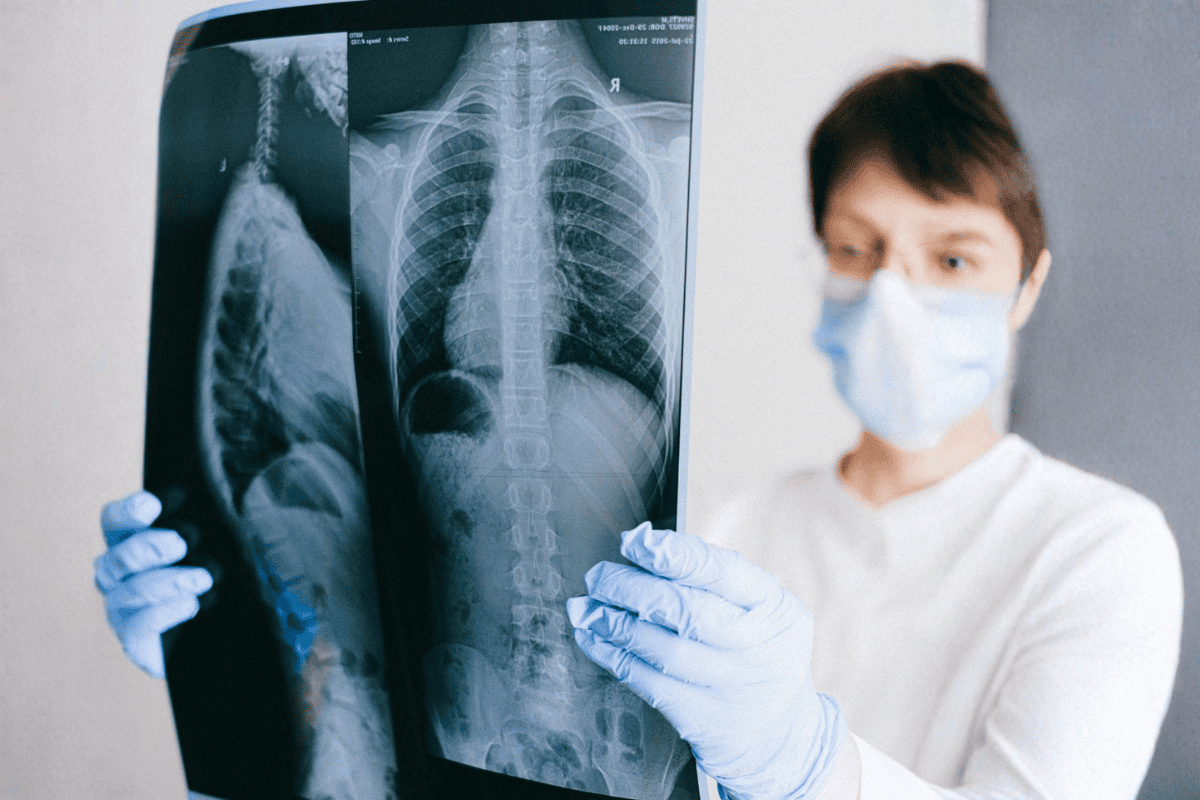
- •Chest X-ray:Often the first test. It can reveal masses in the lungs or changes in lung tissue.
- •CT scan:Provides detailed images of your lungs and can detect smaller tumours that X-rays might miss. It also shows whether cancer has spread to nearby structures like lymph nodes or the spine.
- •MRI:Particularly useful for evaluating whether cancer has spread to the spine or for detailed views of soft tissue.
- A PET scan shows metabolic activity and can identify cancer cells throughout the body, including bone metastases that might be causing your back pain.
These imaging tests help establish lung cancer symptoms back pain location, and determine if the pain is truly cancer-related.
Biopsy and laboratory tests
If imaging suggests cancer, a biopsy confirms the diagnosis. A small tissue sample is examined under a microscope to identify cancer cells and determine the specific type.
Blood tests don't diagnose lung cancer directly, but can reveal markers and assess overall health.
Treatment options for back pain caused by lung cancer
Once lung-cancer-related back pain is confirmed, lung cancer treatment targets both the cancer and the pain.
- •Medicines:Start with OTC; escalate to prescriptions, including opioids for severe pain.
- •Cancer-directed treatment:Chemotherapy shrinks tumours; radiation eases bone/spine pain; immunotherapy boosts immune attack; targeted therapy helps specific mutations.
- •Nerve blocks & physiotherapy:Blocks interrupt pain signals; tailored exercises maintain mobility and reduce pain.
- •SurgeryRemove compressing tumours, stabilise weak vertebrae, or relieve spinal cord compression.
- •Palliative/supportive care:Coordinate symptom relief, manage side effects, and protect quality of life throughout treatment.
Consult experts for your lung cancer back pain
Lung cancer symptoms back pain connections are real and important to understand. But remember: most back pain isn't cancer.
If you're experiencing persistent upper or mid-back pain that's worsening over time, especially with other concerning symptoms, see a doctor. Early detection of lung cancer significantly improves treatment outcomes.
For comprehensive evaluation of concerning symptoms or expert guidance on lung cancer treatment options, connect with specialists at Everhope who can provide accurate diagnosis and personalised care plans.
Questions
FAQs on lung cancer back pain
How can I tell if my back pain is from lung cancer?
Back pain from lung cancer is typically persistent, progressive, and doesn't improve with rest or typical pain relievers, especially when combined with respiratory symptoms like chronic cough, shortness of breath, or unexplained weight loss.
Does lung cancer back pain get worse at night?
Yes, lung cancer back pain often worsens at night and can disrupt sleep, unlike typical mechanical back pain that usually improves with rest and lying down.
Can constant back pain be an early sign of lung cancer?
Constant back pain can occasionally be an early lung cancer sign, though it's more common in advanced stages when tumours are larger or cancer has spread to bones or nerves.
Related Blogs


Prevention5 min read
Air Pollution and Lung Cancer: Risks, Progression, and What Patients Should Do
Dr. Vrundali Kannoth