

Symptoms5 min read
Folic Acid Supplement: Importance, Benefits and Deficiency Symptoms
Dr. Vrundali Kannoth
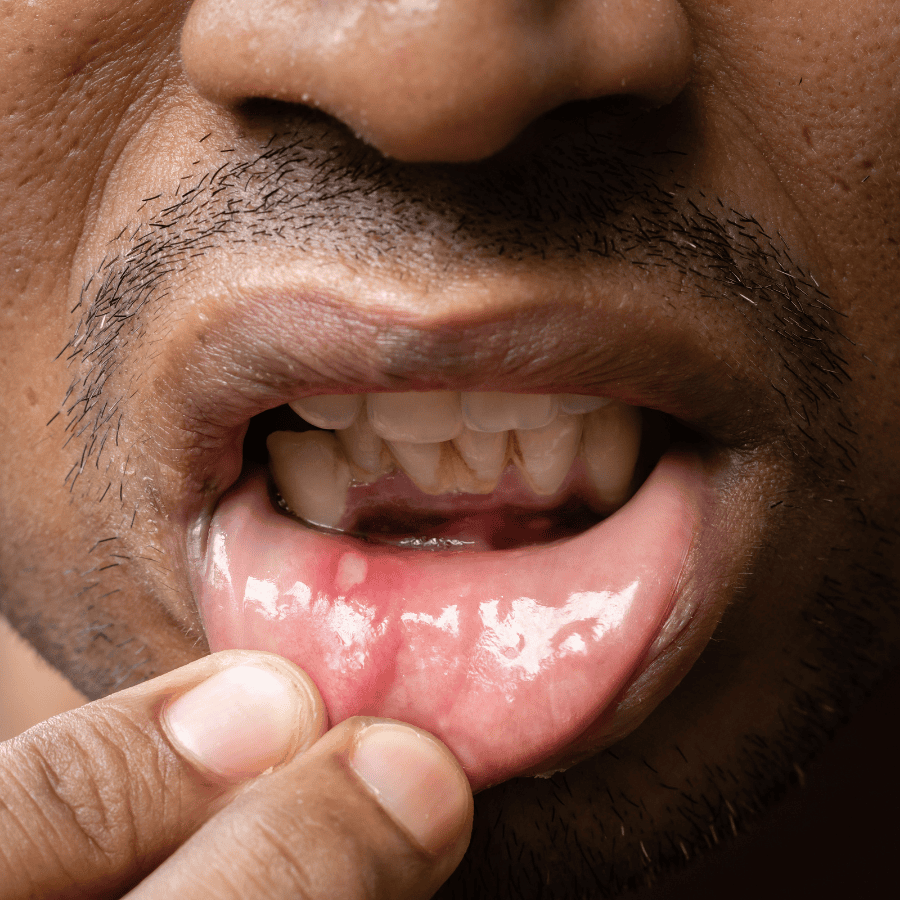
A small bump has appeared on your lower lip. It's soft, moves slightly when touched, and doesn't hurt. Should you be concerned? When you notice anything unusual in your mouth, worry naturally follows. Is it serious? Could it be cancer? These fears are completely understandable. Here's something that might ease your mind immediately: that painless, fluid-filled bump on your lip is most likely a mucocele, something entirely harmless that many people develop at some point. It's not cancer, won't become cancer, and usually resolves on its own. But we also understand that reassurance alone isn't enough. You need to know the difference between something benign and something requiring urgent attention. Let's walk through this together so you can recognise what you're dealing with and when to seek help.
A mucocele is a harmless, fluid-filled cyst that develops when a minor salivary gland gets blocked or damaged. Your mouth has hundreds of tiny glands producing saliva throughout the day. When one of these glands' ducts gets blocked, usually from accidentally biting your lip or cheek, saliva accumulates behind the blockage. This creates a soft, bluish bump filled with mucus. Common characteristics include:
Mucoceles are extremely common, affecting approximately 2-3% of people at some point. They occur most frequently in people under 30 but can develop at any age.
The question "is mucocele cancerous" has a clear answer: absolutely not. Mucoceles are benign lesions with zero cancer potential.
Understanding what oral cancer actually is helps explain why mucocele or cancer confusion occurs. Oral cancer develops when cells in your mouth, tongue, lips, or throat undergo malignant transformation and grow uncontrollably. It's one type of head and neck cancer that can affect various oral tissues. Common sites include:
Head and neck cancer symptoms often include persistent sores, lumps, white or red patches, difficulty swallowing, or unexplained bleeding. Unlike mucoceles, oral cancers typically don't disappear and reappear. They persist and often grow progressively.
Tobacco cancer represents a major risk factor. According to research, tobacco use (smoking or chewing) accounts for approximately 90% of oral cancer cases in India.
The key difference between the two is that while both mucoceles and oral cancers can appear as lumps in your mouth, their nature, behaviour, and implications differ completely.
Let’s answer directly and clearly: no, mucoceles are not cancerous. This bears repeating because are mucoceles cancerous is one of the most common questions patients ask. Mucoceles are benign retention cysts. They contain only mucus and damaged salivary gland tissue. No malignant cells exist within them. So, can mucocele cause cancer? No. Mucoceles don't transform into cancer or increase your cancer risk. The mucocele cancer connection simply doesn't exist medically. These are completely separate conditions, and now we know the answer to "can mucocele turn into cancer." The confusion arises because both can present as oral lumps. But that's where similarity ends.
Understanding the difference between a mucocele and cancer helps you recognise what you're seeing.
| Feature | Mucocele | Oral cancer |
|---|---|---|
| Appearance | Bluish, translucent, dome-shaped | White, red, or normal coloured; irregular |
| Texture | Soft, fluid-filled, fluctuant | Firm, hard, fixed to deeper tissue |
| Pain | Painless (unless bitten) | Often painless initially, may become painful |
| Growth | Fluctuates; may burst and refill | Progressive, steady growth |
| Location | Lower lip (most common), inner cheek | Tongue, floor of mouth, any oral site |
| Surface | Smooth, intact skin | May be ulcerated, rough, bleeding |
| Duration | Comes and goes over weeks | Persistent, doesn't resolve |
| Age | Common in young adults | More common over age 40 |
| Risk factors | Lip/cheek biting trauma | Tobacco, alcohol, HPV infection |
The difference between mucocele and cancer becomes clear when you observe behaviour over time. Mucoceles fluctuate in size, sometimes bursting and releasing clear fluid before reforming. Mucocele cancer lumps, by contrast, grow steadily without these fluctuations. Moreover, there are mucocele lip cancer concerns that often arise because the lower lip is both a common mucocele site and a potential oral cancer location. However, a soft, bluish, fluctuant lower lip bump is almost certainly a mucocele, not cancer.
Distinguishing a mucocele or cancer requires proper evaluation when you're uncertain.

Your dentist or doctor examines the lesion's size, colour, texture, and location. They ask about duration, whether it fluctuates, and if you've noticed any changes. Typical mucoceles are diagnosed clinically based on characteristic appearance and history. No further testing is usually needed.
Ultrasound imaging shows the fluid-filled nature of mucoceles versus solid masses, suggesting other diagnoses. Fine needle aspiration withdraws fluid for examination. Mucoceles yield clear, viscous mucus. This simple office procedure confirms the diagnosis without surgery. Excisional biopsy removes the entire lesion for pathological examination. This provides a definitive diagnosis whilst treating the mucocele simultaneously.
For suspected oral mucocele cancer, a biopsy is mandatory. A small tissue sample is examined under microscopy. This identifies malignant cells and determines specific types of cancer and stages of cancer present.
According to guidelines from the Indian Dental Association, any oral lesion persisting beyond three weeks without clear benign characteristics warrants biopsy to rule out malignancy.
Many mucoceles resolve spontaneously within weeks without intervention. Observation is perfectly appropriate for typical cases. Surgical removal is recommended when mucoceles:
The procedure is simple and is performed under local anaesthesia. The cyst and affected salivary gland are removed. Recurrence after complete excision is uncommon.
Avoid chronic lip or cheek biting. If you habitually bite these areas, addressing this habit reduces mucocele risk. Moreover, oral cancer requires comprehensive cancer treatment:
Some common cancer risk factors include:
Research shows that eliminating tobacco use reduces oral cancer risk by approximately 75-80% in previously high-risk individuals.
No, a mucocele is not an early cancer stage. It's a completely benign fluid-filled cyst with no cancer potential or malignant transformation risk.
Early oral cancer lumps are often painless, which delays diagnosis. Pain typically develops as tumours grow larger or ulcerate, making painless lumps particularly concerning.
No, intact mucoceles don't bleed. They may rupture, releasing clear mucus, then refill. Oral cancers often ulcerate and bleed easily with minor trauma.