The connection between tobacco and cancer is undeniable. Tobacco use is the single largest preventable cause of cancer globally, responsible for approximately 30% of all cancer deaths.
Whether you smoke cigarettes, use bidis, chew gutka, or consume tobacco in any form, understanding how tobacco causes cancer could save your life. It's about facts, awareness, and hope because quitting at any age provides significant health benefits.
This guide explains the science behind tobacco-related cancers, identifies warning signs, and provides practical strategies to reduce your risk or quit successfully.
Understanding the link between tobacco and cancer
Does tobacco cause cancer? The answer, backed by decades of research, is an emphatic yes.
In India, the problem is particularly severe. According to the National Cancer Registry Report , tobacco accounts for nearly 50% of all cancers in men and 20% in women. The Indian subcontinent has the highest oral cancer rates globally, driven largely by smokeless tobacco consumption.
How does tobacco lead to cancer?
Tobacco contains over 7,000 chemicals, at least 70 of which are proven carcinogens. When you smoke or chew tobacco, these chemicals damage your DNA.
When DNA damage accumulates and repair mechanisms fail, cells begin growing uncontrollably, forming tumours.
The relationship between tobacco consumption and cancer is dose-dependent: the more you use and the longer you use it, the higher your risk. However, quitting at any point reduces this risk significantly.
How tobacco causes cancer in the body
Understanding the mechanisms behind cancer due to tobacco helps explain why it's so dangerous.
Cancer-causing agents in tobacco
Cancer causing agent in tobacco and cancer causing substance in tobacco include multiple deadly chemicals:
In tobacco smoke:
•Polycyclic aromatic hydrocarbons (PAHs)
Formed during combustion, directly damage DNA
•N-Nitrosamines
Powerful carcinogens that cause mutations
•Benzene
Linked to blood cancers like leukaemia
•Formaldehyde
Damages respiratory tissue and DNA
•Arsenic and chromium
Heavy metals that interfere with DNA repair
In smokeless tobacco (gutka, khaini, zarda):
•Tobacco-specific nitrosamines (TSNAs)
Most potent carcinogens in chewing tobacco
•Polonium-210
Radioactive substance that damages cells
•Areca nut alkaloids
In products like gutka, independently increase cancer risk
•Carcinogens enter your lungs and are absorbed into your bloodstream
•These chemicals travel throughout your body, affecting organs far beyond your lungs
•They damage DNA in cells across multiple organ systems
•Chronic inflammation from smoke exposure creates an environment where cancer can develop
•Smoke impairs your immune system's ability to detect and destroy abnormal cells
The International Agency for Research on Cancer classifies tobacco smoke as a Group 1 carcinogen - the highest risk category.
Secondhand smoke exposure
You don't have to use tobacco yourself to be at risk. Secondhand smoke contains the same carcinogens as directly inhaled smoke.
In India, where smoking indoors is common despite regulations, countless individuals face elevated cancer risk from environmental tobacco smoke.
Chewingtobacco & oral cancer risk
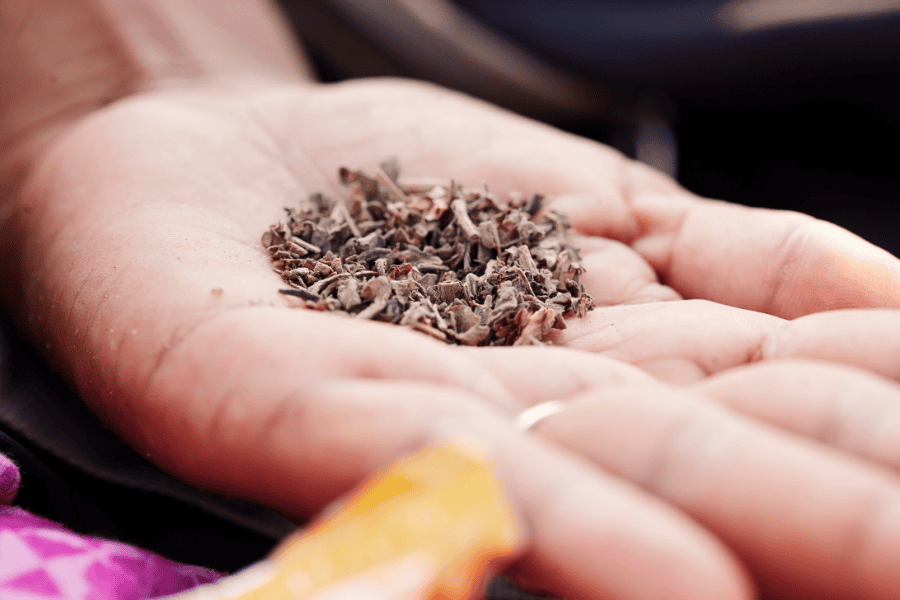
Chewing tobacco cancer risk is substantial and often underestimated. In India, where smokeless tobacco use is deeply culturally embedded, this represents a major public health crisis.
Chances of getting cancer from chewing tobacco:
Research published in The Lancet Global Health found that regular smokeless tobacco users have:
•4-6 times higher risk of oral cancer
•2-3 times higher risk of oesophagal cancer
•Elevated risk of pancreatic cancer
Chewing tobacco cancer rates are highest in states like Bihar, Uttar Pradesh, and Maharashtra where gutka and khaini consumption is prevalent. The ICMR reports that oral cancer constitutes nearly 30% of all cancers in India - the highest proportion globally.
4 types of cancers linked to tobacco
Cancer of tobacco affects multiple organ systems.
1. Oral cancer due to tobacco
Oral cancer due to tobacco is the most common tobacco-related cancer in India. Tobacco mouth cancer includes cancers of the lips, tongue, cheeks, floor of mouth, hard palate, and gums.
Why tobacco products cause oral cancer:
Smokeless tobacco sits directly against oral tissues for extended periods. Tobacco oral cancer develops when carcinogens in these products damage DNA in mouth cells.
The areca nut often mixed with tobacco (in paan, gutka) independently increases risk and accelerates cancer development.
2. Lung cancer
Lung cancer is the most common cancer caused by smoking worldwide. Approximately 85-90% of lung cancer cases are attributable to tobacco use.
Tobacco smoke directly damages lung tissue. Cells lining the airways undergo changes, from irritation to precancerous changes to invasive cancer, over the course of years of exposure. Even people who smoke "just a few cigarettes" daily face significantly elevated risk.
3. Throat & oesophagus cancer
Throat cancer (laryngeal and pharyngeal cancer) and oesophageal cancer are strongly linked to tobacco use, especially when combined with alcohol.
When you smoke or chew tobacco, carcinogens pass through your throat and oesophagus, damaging cells along the way.
4. Stomach, pancreatic & other cancers
Tobacco cancer extends beyond obvious contact sites:
Stomach cancer : Tobacco use increases risk by 1.5-2 times. Carcinogens absorbed into the bloodstream reach stomach tissue, while swallowed tobacco particles directly contact the stomach lining.
Pancreatic cancer: One of the deadliest cancers, with 25-30% of cases attributable to smoking. Tobacco chemicals damage pancreatic cells and promote chronic inflammation.
Other tobacco-linked cancers include:
•Bladder cancer
(tobacco chemicals filtered through kidneys concentrate in bladder)
•Kidney cancer
•Liver cancer
•Cervical cancer
•Colorectal cancer
•Blood cancers
(certain types of leukaemia)
Signs & symptoms of tobacco-related cancers
So, can tobacco cause cancer? Yes, but recognising tobacco cancer symptoms enables earlier detection and better outcomes.
Tobacco mouth cancer symptoms
Tobacco mouth cancer symptoms that should prompt immediate evaluation:
•White or red patches in mouth
(leukoplakia or erythroplakia)
•Non-healing sores or ulcers lasting more than 2 weeks
•Lumps or thickening in cheeks, lips, or tongue
•Difficulty chewing, swallowing, or moving tongue
•Numbness in mouth or tongue
•Persistent pain in mouth or ear
•Loose teeth without dental disease
•Change in voice or speech
Chewing tobacco cancer signs often appear where the tobacco product is habitually held - the lower lip, inside cheeks, or floor of mouth.
Symptoms of throat & tongue cancer
Throat and tongue cancers present with:
•Persistent sore throat or cough
•Hoarseness lasting more than 2 weeks
•Difficulty or pain when swallowing
•Sensation of something stuck in throat
•Ear pain
•Lump in neck
(swollen lymph node)
•Unexplained weight loss
Tongue cancer from chewing tobacco specifically may cause:
•Painful tongue ulcer that doesn't heal
•Difficulty moving tongue
•Pain while eating spicy or acidic foods
•Visible mass or thickening on tongue
Early detection dramatically improves survival. If you use tobacco and experience any of these symptoms lasting more than 2 weeks, see a doctor immediately.
Who is at higher risk?
While all tobacco users face elevated cancer risk factors, certain individuals are at particularly high risk.
Frequency and duration of use:
Tobacco related oral cancer risk increases with:
•Quantity
More cigarettes/bidis daily or more frequent chewing increases risk
•Duration
Years of use matter more than intensity. Someone smoking 1 pack daily for 30 years faces higher risk than someone smoking 2 packs daily for 5 years
•Age started
Beginning tobacco use in teens or early 20s increases lifetime cancer risk
Family history & genetic factors:
If you have family members diagnosed with tobacco-related cancers, your risk is higher even with the same tobacco use level.
Combined risk factors:
Chewing tobacco cancer rates skyrocket when combined with:
•Alcohol consumption
(multiplies oral and throat cancer risk)
•HPV infection
(particularly for oral cancers)
•Poor oral hygiene
•Betel quid or areca nut chewing
•Occupational exposures
(asbestos, chemicals)
Practicaltips to reduce risk
The best way to reduce tobacco cancer risk is to never start using tobacco. But if you currently use it, quitting is the single most important action you can take.
For current tobacco users:
1. Set a quit date:
Choose a specific day within the next 2 weeks. Mark it clearly.
2. Identify triggers:
Notice when you crave tobacco - stress, after meals, with tea, social situations. Plan alternatives.
3. Use cessation aids:
Nicotine replacement therapy (patches, gum), prescription medications (varenicline, bupropion), or counselling all increase success rates.
4. Seek support:
Join quit tobacco programs. In India, mCessation (text message service) and tobacco cessation centres provide free support.
1. Set a quit dateChoose a specific day within the next 2 weeks. Mark it clearly.
2. Identify triggersNotice when you crave tobacco - stress, after meals, with tea, social situations. Plan alternatives.
3. Use cessation aidsNicotine replacement therapy (patches, gum), prescription medications (varenicline, bupropion), or counselling all increase success rates.
4. Seek supportJoin quit tobacco programs. In India, mCessation(text message service) and tobacco cessation centres provide free support.
5. Replace the habit
When you crave tobacco, try:
•Never start as even occasional use increases risk
•Avoid secondhand smoke exposure
•Advocate for smoke-free environments
•Educate family members, especially youth, about risks
6. Expect challenges
Withdrawal symptoms peak in the first 2 weeks but decrease after. Physical addiction ends within weeks; psychological habits take longer to break.
For those who've never used tobacco:
•Never start as even occasional use increases risk
•Avoid secondhand smoke exposure
•Advocate for smoke-free environments
•Educate family members, especially youth, about risks
Additional protective measures:
•Limit alcohol consumption
•Maintain good oral hygiene
(regular brushing, dental checkups)
•Eat a diet rich in fruits and vegetables
•Get regular cancer screenings if you're a current or former user
Fighttobaccocancer with the best experts by your side
The link between tobacco cancer and tobacco use is irrefutable.
But here's the hope: your body begins healing the moment you quit. Within days, circulation improves. Within weeks, lung function increases. Within years, cancer risk drops significantly. Oral cancer after quitting tobacco risk decreases by 50% within 5 years.
For tobacco cancer treatment or screening for tobacco-related cancers, connect with healthcare professionals who can provide personalised guidance and resources.
FAQs
Common questions about this topic
Yes, quitting significantly reduces cancer risk over time. Within 5-10 years of quitting, lung cancer risk drops by 50%, and oral cancer risk decreases substantially.
Yes, oral cancer caused by tobacco is curable, especially when detected early. Stage I-II oral cancers have 70-90% five-year survival rates with treatment.
Cancer typically develops after decades of tobacco exposure, though duration varies individually. Most tobacco-related cancers appear after 20-30 years of regular use. However, heavy users may develop cancer sooner, while some long-term users never develop cancer due to genetic factors.