Education5 min read
Metastatic Prostate Cancer Guide: Diagnosis, Treatment & Care
Dr. Vrundali Kannoth
When you hear about prostate cancer mutations, it might sound like complex science, but these changes can actually influence how your cancer behaves and how oncologists plan treatment.
Some of these genetic changes, such as a BRCA or ATM mutation, can make prostate cancer cells weaker at repairing themselves. However, that weakness can be used to your advantage, opening the door to treatments and chemotherapies designed to specifically target those flaws.

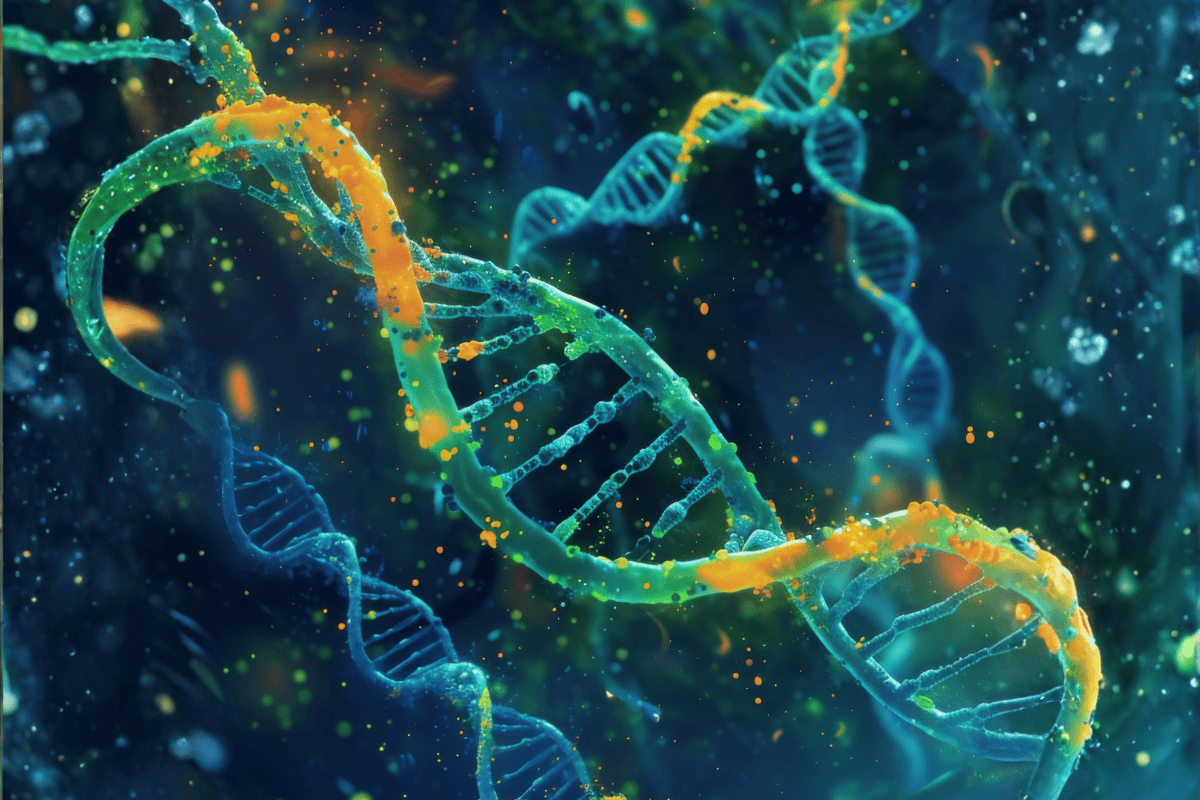
Every cell in the prostate carries DNA - a set of instructions that tells it how to grow and function. Prostate cancer mutations happen when parts of this DNA get damaged or altered. Over time, these errors can make cells divide uncontrollably and form tumours.
These genetic mutations can be inherited (germline) or acquired (somatic) at a specific prostate cancer age:
| Inherited or germline mutations | Acquired or somatic mutations |
|---|---|
| These are passed down from your parents and exist in every cell of your body from birth. Changes like the BRCA2 gene mutation or ATM gene mutations fall into this category. They increase the risk of developing prostate cancer earlier or in more aggressive forms. | These occur later in life, often due to factors such as ageing, environmental exposure, or random DNA errors. These are not passed to your children but can still influence how your cancer grows and responds to treatment. |
Both types matter because they tell your oncology doctor why the cancer developed and which treatments are most likely to work.
Both types matter because they tell your oncology doctor why the cancer developed and which treatments are most likely to work.
A BRCA mutation affects the body's ability to repair damaged DNA. Normally, the BRCA genes act like quality-control agents, fixing genetic errors that could lead to uncontrolled cell growth. But when these genes are mutated, that repair process falters, allowing damaged cells to multiply and increasing the risk of certain cancers, including prostate cancer.
There are two main types of these genes, BRCA1 and BRCA2, and while both are involved in DNA repair, they work in slightly different ways:
The good news is that understanding this link helps guide treatment choices. For instance, cancers caused by a BRCA2 mutation may respond better to targeted therapies, such as PARP inhibitors, which exploit the very DNA repair weakness that the mutation creates.
The ATM gene acts as the body’s early warning system for DNA damage. When your DNA breaks, ATM detects it, pauses cell division, and triggers repair pathways so that the damage doesn’t get passed on.
However, when there’s an ATM gene mutation, this safety mechanism becomes weakened. Damaged cells keep dividing, leading to more genetic instability - one of the key ways prostate cancer mutations develop and progress.
| Gene | Role in DNA repair | Effect when mutated |
|---|---|---|
| ATM prostate cancer mutation | Detects DNA damage and signals the cell to stop dividing and start repairing. | The cell doesn’t recognise or respond to DNA damage, leading to genetic instability. |
| BRCA2 prostate cancer mutations | Directly repairs broken DNA strands through homologous recombination. | Damaged DNA remains unrepaired, allowing cancer-promoting mutations to build up. |
Studies have found a clear association between the ATM gene mutation and prostate cancer, indicating that men with this mutation face roughly a 2.5-fold higher risk.
This means that while ATM mutations in prostate cancer are less severe than BRCA2 mutations in prostate cancer, they still play a powerful role in shaping how the cancer behaves, spreads, and responds to treatment.
If you’re wondering how to find out whether you carry genes like BRCA2 or ATM that increase your risk of prostate cancer symptoms, genetic testing is the way to go. It’s a simple test that looks for inherited changes in your DNA, helping identify prostate cancer mutations that might make the disease more likely to occur or progress more aggressively.
If you’re wondering how to find out whether you carry genes like BRCA2 or ATM that increase your risk of prostate cancer symptoms, genetic testing is the way to go.
It’s a simple test that looks for inherited changes in your DNA, helping identify prostate cancer mutations that might make the disease more likely to occur or progress more aggressively.
Genetic testing isn’t just about you, though; it can also reveal risks within your family. If a mutation is detected, close relatives may share that same genetic pattern, allowing them to take preventive steps or undergo screening earlier.
Your cancer’s genetics[b] matter. ATM mutations and BRCA mutations in prostate cancer can influence the tumour’s behaviour.
If you’re considering genetic testing, start by consulting your doctor or a genetic counsellor. They can help determine if testing is right for you based on your personal and family history.
The most common ones include ATM gene mutations and BRCA mutations, particularly the BRCA2 gene mutation in prostate cancer, all of which affect how cells repair DNA damage.
Yes, both BRCA mutation and ATM mutations in prostate cancer can be inherited, meaning a family history of these mutations may increase the risk of developing prostate cancer.
Genetic testing is highly recommended as identifying the role of ATM gene mutation and BRCA mutation in prostate cancer can help personalise treatment and assess family risk.