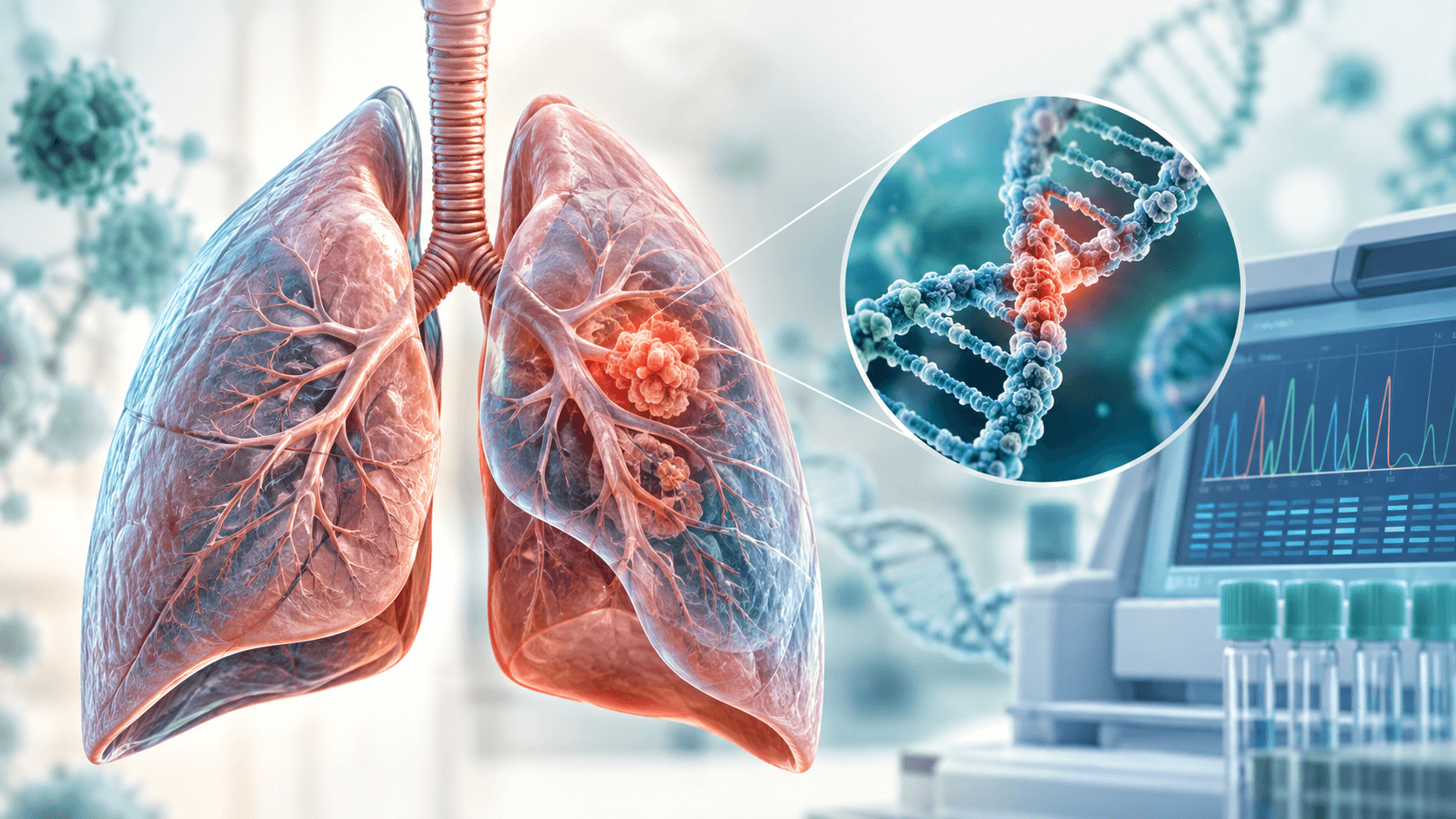


Resistance Mutations in Lung Cancer: Causes and the Importance of Testing

*Resistance *Mutations *in *Lung *Cancer: Causes and the Importance of Testing
Dr. Vrundali Kannoth|7 min read|

What Are Resistance Mutations?

  • Resistance mutations are genetic changes that reduce the effectiveness of lung cancer treatments. They often occur when tumors that initially respond to targeted therapies develop new mutations, allowing them to evade these drugs.
  • Tumors are made up of diverse cell populations. During treatment, cells less sensitive to therapy may survive and eventually become the dominant type, leading to "acquired resistance."

Why Does Resistance Develop?

  • Treatment pressure can drive changes in lung cancer cells. Sensitive cells die off, but a small group with unique genetic traits or alternative growth pathways may survive.
  • This is related to tumor heterogeneity and clonal evolution, where the fittest clone takes over as treatment continues.
  • Resistance can result from genetic mutations or gene amplification, as well as non-genetic factors like activation of bypass pathways, changes in cell behavior, or transformation to other tumor types.

Common Resistance Mutations in NSCLC

  • The specific resistance mutations in non-small cell lung cancer (NSCLC) depend on the original genomic driver and therapy used.
  • Examples include:
    • EGFR T790M mutation: Causes resistance to first- and second-generation EGFR inhibitors.
    • ALK mutations: Secondary mutations in the ALK domain reduce effectiveness of targeted ALK drugs.
    • ROS1 mutations, such as ROS1 G2032R, also block certain therapies.
  • Other mechanisms involve activating alternative signaling pathways (e.g., MET, PI3K/AKT, RAS/MAPK, HER2).

When Should Resistance Testing Be Done?

  • Consider testing when cancer progresses during or after targeted therapy, or when treatment stops working unexpectedly.
  • Testing decisions depend on:
    • Cancer subtype
    • Original genomic alteration (e.g., EGFR, ALK, ROS1, RET, MET, BRAF, KRAS)
    • The kind and line of therapy received
    • Disease progression patterns and timing
    • Availability of tumor tissue for biopsy
    • Previous molecular test results

How Is Resistance Testing Performed?

Cancer nutrition supplements
Nutritional supplements curated by oncologists
A platform for cancer nutrition.
Clinically guided. Built for care.
  • •Tissue biopsy:
    Samples from tumors are analyzed for resistance mutations; provides information not always seen in blood.
  • •Liquid biopsy:
    Blood tests for circulating tumor DNA (ctDNA) reveal resistance mutations non-invasively. A negative result may require additional testing.
  • •Next-Generation Sequencing (NGS):
    Tests multiple genes and mutation types from a single sample, useful when the resistance mechanism is unclear.

Impact on Treatment Planning

  • Identifying resistance mutations can inform the next treatment step, such as:
    • Switching to a different targeted therapy
    • Considering chemotherapy or immunotherapy
    • Exploring clinical trials or combination approaches
  • Test results are best interpreted alongside imaging, symptoms, and clinical history. Resistance mutations are just one piece of the overall puzzle.

Treatment Options After Resistance

  • Alternative targeted therapies may work if a treatable mutation is found.
  • Chemotherapy or immunotherapy may be options, depending on cancer subtype and patient status.
  • Clinical trials may provide access to emerging treatments, especially when standard options are limited.

Key Takeaways

Resistance mutations decrease the effectiveness of lung cancer therapies. They arise from various mechanisms, including genetic mutations, amplifications, and pathway activation. Testing can involve tissue biopsy, liquid biopsy, and NGS, and helps guide precision oncology. Not every resistance mutation is currently treatable, but identifying them still guides future planning.
Questions

Frequently Asked Questions

What causes resistance in lung cancer?

Secondary mutations, bypass signaling, gene amplifications, or cell-type transformation are common causes. The specific mechanism depends on the original driver and therapy.

When should you test for resistance mutations?

When cancer progresses during/after targeted therapy or if a treatment suddenly stops working.

Can NGS detect resistance mutations?

Yes, NGS can screen for many possible resistance-associated mutations.

Is liquid biopsy reliable?

Liquid biopsies can detect many resistance mutations, but a negative result may still need tissue confirmation.

Are all resistance mutations treatable?

No, but knowing which resistance mutation is present can still shape your treatment plan and clinical trial options.

Related Blogs