

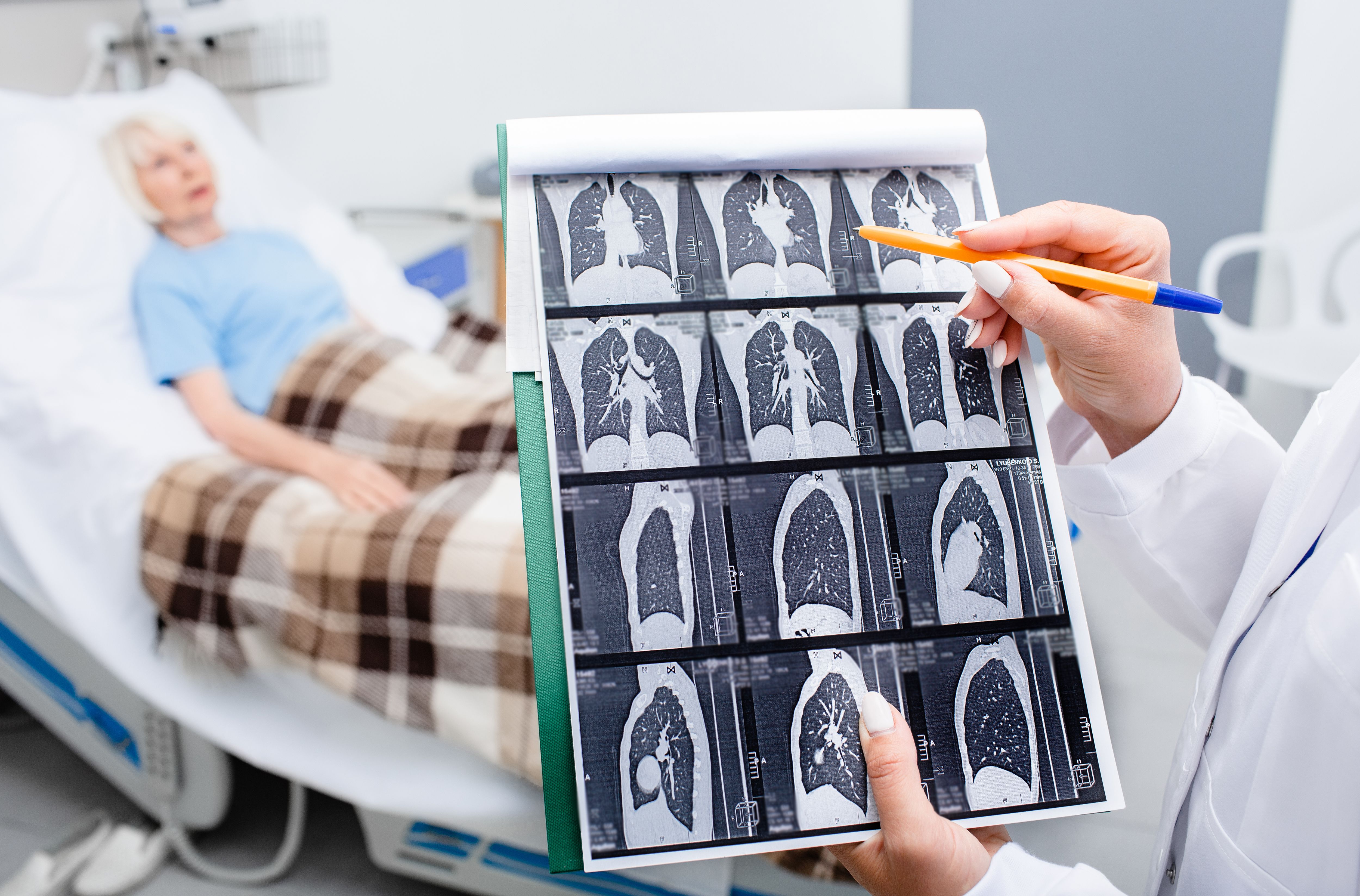
What Are Tissue NGS and Liquid Biopsies in Lung Cancer?
Dr. Vrundali Kannoth|5 min read|
Tissue-based next-generation sequencing (NGS) is a laboratory technique that reads DNA from tumour tissue samples to detect multiple genetic changes at once. Liquid biopsy is a blood test that detects tumor-derived material, most commonly circulating tumour DNA (ctDNA), which cancer cells release into the bloodstream.
Both methods can be used for molecular profiling and mutation detection in appropriate lung cancer cases, assisting in the identification of actionable alterations that may guide treatment. The main distinction is in the sample type and what each test can reveal: tissue. NGS analyses DNA directly from the tumour, whereas liquid biopsy captures a snapshot of tumour DNA circulating in blood, which can represent multiple tumour sites but may be less in quantity depending on disease burden.
What is Tissue NGS for Lung Cancer?
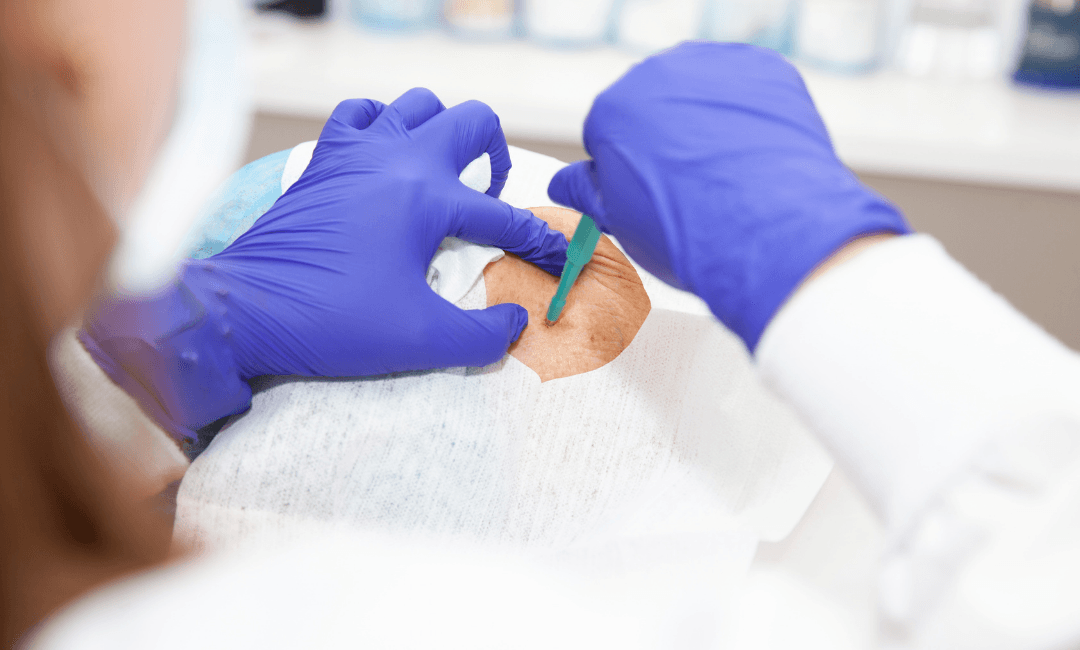
Tissue NGS makes use of tumour tissue obtained via biopsy (needle, bronchoscopic, or surgical) or surgical resection. The sample is processed in the lab to extract DNA (and occasionally RNA), which is then sequenced to detect genomic changes across multiple genes at once.
This comprehensive approach can evaluate commonly altered drivers in non-small cell lung cancer (NSCLC), including EGFR, ALK, ROS1, KRAS, BRAF, MET, RET, and NTRK, as well as other changes such as copy-number alterations or fusions when clinically appropriate. Because it begins with actual tumour tissue, it also facilitates pathology review and tumour content assessment prior to sequencing. The NGS Testing in Lung Cancer pillar page provides a more in-depth look at how this fits into patient care.
What is a liquid biopsy for lung cancer?
A liquid biopsy tests a blood sample for ctDNA or other tumor-derived material (such as circulating tumour cells or exosomes). The most commonly used component in molecular profiling is ctDNA, which contains tumor-specific mutations that can be read by NGS or targeted assays.
The amount of detectable ctDNA varies by patient and clinical situation. It is typically higher in advanced or metastatic disease and lower in early-stage cancer or when the tumour burden is low. This variability influences how sensitive the test is for detecting mutations.
Tissue NGS and Liquid Biopsy: Key Differences
Sample Collection
- Tissue biopsy: A tumour tissue sample is obtained through an invasive procedure.
- Liquid biopsy: Generally uses a standard blood draw.pmc.ncbi.nlm.nih+1
Mutation detection
Both tests can detect genomic alterations, but detection capabilities vary depending on sample quality, tumour DNA levels, and the type of alteration (e.g., point mutations versus gene fusions). Tissue NGS is often more sensitive for fusions and low-frequency changes when Sample Collectionvolves a standard blood draw. pmc.ncbi.nlm.nih+1A shedding is low.
Tumoral heterogeneity
Different areas of a tumor—or metastatic sites—may have distinct molecular profiles. Liquid biopsy can collect DNA from multiple sites in the bloodstream, potentially reflecting spatial heterogeneity more accurately than a single tissue core. However, tissue remains necessary for initial diagnosis and histology.
Test Turnaround and Accessibility
Practical differences exist in sample collection: blood draws are quick and widely available, whereas tissue biopsies are dependent on lesion location, patient fitness, and procedural logistics. Turnaround time varies by laboratory and assay; making broad claims about speed should be avoided.
Invasiveness
Tissue biopsy is an invasive procedure that can cause bleeding, pain, and pneumothorax in lung lesions. Liquid biopsy is a minimally invasive procedure that requires only a blood sample.
Tissue NGS vs Liquid Biopsy for Mutation Detection
Both approaches are important in identifying actionable genomic changes that can inform precision oncology. Tissue NGS provides a direct, comprehensive readout from the tumour, whereas liquid biopsy is a less invasive method that can be repeated over time.
In some cases, the two tests provide complementary information: tissue confirms histology and detects alterations that are difficult to see in blood, whereas liquid biopsy can detect emerging resistance mutations or changes across metastatic sites. Importantly, a negative liquid biopsy result does not always rule out the presence of a tumour mutation; tissue testing should still be considered when clinical suspicion is high.
Which is more accurate, tissue NGS or liquid biopsies?
The answer to the question of tissue NGS versus liquid biopsy accuracy is context-dependent. Accuracy and sensitivity are influenced by the test platform, sample quality, tumour DNA levels in blood, and the genomic alteration under investigation.
In advanced NSCLC with a sufficient tumour burden, liquid biopsy has high concordance with tissue for key drivers such as EGFR, KRAS G12C, and some fusions—but sensitivity is reduced in early-stage disease or low-shedding tumours. Tissue testing may still be necessary if liquid biopsy does not detect a relevant alteration, as false negatives can occur when ctDNA is scarce
When Is Tissue NGS Used for Lung Cancer?
Tissue-based molecular testing could be used in situations like:
- Newly diagnosed lung cancer requiring molecular profiling (particularly advanced/metastatic NSCLC).
- When adequate tumor tissue is available and safe to obtain.
- When detailed tumour pathology and molecular data are required simultaneously (for example, to confirm subtype and identify drivers).
Tissue NGS enables biomarker-guided decisions for EGFR, ALK, ROS1, KRAS, and other alterations. For more information on specific markers, see our blogs on EGFR, ALK, ROS1, and KRAS mutation testing.
When Is Liquid Biopsy Used in Lung Cancer?
Blood-based testing may be used when:
- Tumour tissue is limited or difficult to obtain (insufficient sample, high-risk location, or patient unfit for biopsy).
- Repeat molecular testing may be useful during disease progression to identify resistance mechanisms.
- Monitoring for specific molecular changes is clinically appropriate.
Plasma testing is generally recommended when tissue is unavailable or insufficient, followed by reflex tissue testing if no driver is found in the blood.
Can Tissue NGS and Liquid Biopsy be Used Together?
Yes. Tissue NGS and liquid biopsy can offer complementary molecular data. For example, tissue may establish the baseline driver profile, while liquid biopsy detects emerging resistance mutations without the need for another invasive procedure.
Combined or sequential testing is increasingly being used in select clinical situations to reduce delays, capture heterogeneity, and keep treatment on track with tumour evolution—all of which are core goals of precision oncology.
Tissue NGS Versus Liquid Biopsy for Lung Cancer Treatment Planning
Molecular findings from either approach can help guide treatment decisions by identifying actionable mutations. When a targetable variant is discovered, patients may be eligible for targeted therapy instead of or in addition to chemotherapy or immunotherapy.
It's important to remember that NGS and liquid biopsy are diagnostic tools, not treatments for lung cancer. Instead, they enable biomarker-guided strategies for matching patients to the most appropriate lung cancer treatment. To learn more, see:
- NGS Testing for Lung Cancer
- Targeted Therapy
- Immunotherapy
- Precision Oncology
Key Takeaways: Tissue NGS vs Liquid Biopsy for Lung Cancer
- Tissue NGS sequences tumor DNA directly; liquid biopsy analyzes ctDNA from blood.
- Both can detect actionable alterations, but sensitivity varies with sample and disease stage.
- Tissue remains the gold standard for initial diagnosis; liquid biopsy is valuable when tissue is limited or for monitoring.
- A negative liquid biopsy does not exclude mutations—tissue testing may still be needed.
- Using both tests together can provide a more complete molecular picture for treatment planning.
Questions
FAQs:
Which is more effective for lung cancer: tissue biopsy or liquid biopsy?
"Better" depends on the clinical question. Tissue biopsy is preferred for initial diagnosis and comprehensive profiling, when possible. Liquid biopsy is useful when tissue is unavailable or unsafe to obtain, as well as for tracking changes over time.
Are tissue NGS and tissue biopsy the same?
Not exactly. Tissue biopsy is a procedure for collecting tumour tissue. Tissue NGS is a molecular test that reads multiple genes at once.
Can liquid biopsy identify the same mutations as tissue NGS?
Usually, but not always. Liquid biopsy can detect many of the same point mutations (EGFR, KRAS), but it may be less sensitive to some fusions or low-frequency changes, particularly in early-stage disease.
Is liquid biopsy as accurate as tissue NGS for lung cancer?
Key drivers are highly concordant in advanced disease with a significant tumour burden. Overall accuracy is determined by ctDNA levels and alteration type; tissue NGS is more sensitive when ctDNA is low.
What if a liquid biopsy does not reveal any mutations?
A negative result indicates that no changes were detected in the blood sample, but it does not rule out tumour mutations. If no driver is detected in plasma and clinical suspicion persists, the guidelines recommend reflex tissue testing.
Related Blogs
Diagnosis5 min read
Lung Cancer Detection: Can X-Ray Detect Lung Cancer Effectively
Dr. Vrundali Kannoth

Nutrition5 min read
Spirulina Biotic Powder: Benefits, Nutrition Facts and Its Role in Cancer Nutrition
Dr. Vrundali Kannoth