

Call Us
Understanding Laparotomy: Purpose, Procedure and Recovery

Understanding Laparotomy: Purpose, Procedure and Recovery

title image

Dr. Vrundali Kannoth5 minutes01 Dec 2025

What Is a Laparotomy? Purpose, Procedure, Recovery Explained

Surgery through tiny incisions sounds ideal. But sometimes, surgeons need full, direct access to your abdominal organs. That's when laparotomy becomes necessary.

This traditional surgical approach has saved countless lives for over a century. Understanding what is laparotomy helps you know what to expect if your doctor recommends this procedure.

Despite advances in laparoscopy surgery , laparotomy remains essential for complex cases, emergencies, and situations requiring extensive examination or reconstruction. This guide explains when it's needed, how it's performed, and what recovery involves.

What is a laparotomy?

Laparotomy meaning refers to surgical opening of the abdominal cavity through a large incision. The term derives from Greek words "lapara" (flank or loin) and "tomy" (cutting).

Unlike minimally invasive techniques, laparotomy provides surgeons with direct visualisation and manual access to abdominal organs. The incision typically ranges from 10-30 cm, depending on procedure requirements.

Laparotomy remains the gold standard for many abdominal surgeries. It allows comprehensive examination, complex repairs, and emergency interventions impossible through smaller incisions.

Why is a laparotomy performed?

Laparotomy causes or indications span diagnostic and therapeutic purposes across multiple medical scenarios.

Emergency situations:

  • Traumatic abdominal injuries
    requiring rapid exploration
  • Perforated intestine
    causing peritonitis
  • Severe abdominal pain
    from unknown causes needing urgent investigation
  • Intestinal obstruction
    not resolving with conservative treatment
  • Uncontrolled internal bleeding

Cancer-related purposes:

  • Staging laparotomy
    for cancer treatment planning, assessing disease extent
  • Removing tumours
    from multiple organs simultaneously
  • Extensive lymph nodes removal
    for cancer staging
  • Debulking surgery
    for ovarian or peritoneal cancers
  • Complex bile duct cancer surgery
    requiring reconstruction

Planned surgical procedures:

  • Major bowel resections
    for Crohn's disease or diverticulitis
  • Organ transplantation
    (liver, kidney, pancreas)
  • Aortic aneurysm repair
  • Extensive adhesion removal
  • Complex hernia repairs

Diagnostic purposes:

  • Diagnostic laparotomy
    when imaging and less invasive methods provide insufficient information
  • Investigating chronic abdominal complaints
    without clear diagnosis
  • Obtaining tissue samples
    (biopsy) from multiple sites

Laparotomy procedure

Understanding the laparotomy procedure and steps of laparotomy helps reduce anxiety about what happens during surgery.

Pre-operative preparation

Before the laparotomy operation, you'll undergo a comprehensive evaluation including blood tests, imaging, and cardiac assessment. Your surgical team reviews your medications and medical history.
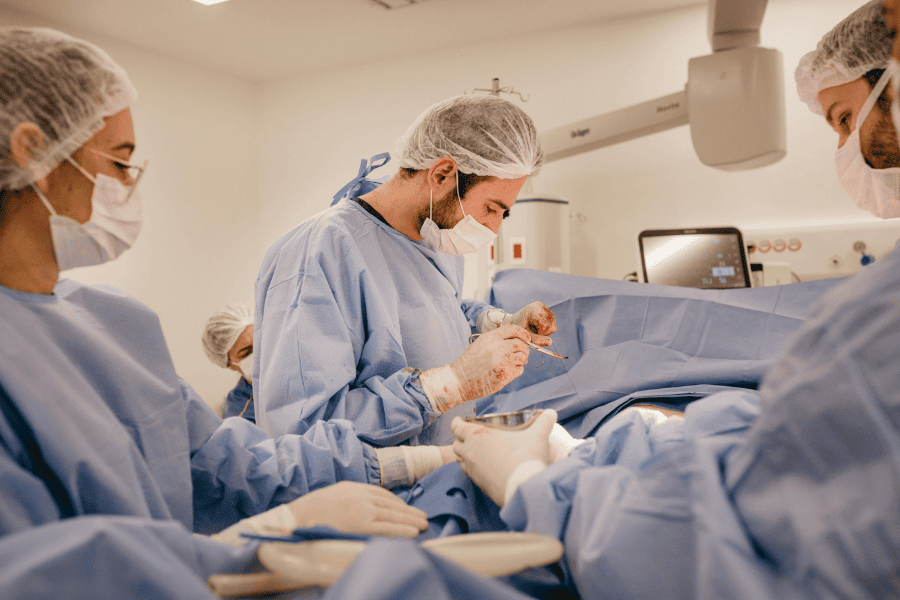
Fasting begins 6-8 hours before surgery. You'll receive antibiotics to prevent surgical site infections. Bowel preparation may be necessary for intestinal procedures.
image

Step-by-step surgical process

Step 1: Anaesthesia and positioning

General anaesthesia ensures you're completely unconscious and pain-free throughout surgery. Anaesthetists monitor vital signs continuously.

Laparotomy position typically involves lying flat on your back (supine position). Arms may be positioned alongside your body or extended slightly. Proper positioning prevents nerve compression during lengthy procedures.

Step 2: Incision

The surgeon makes a carefully planned incision. Midline laparotomy through the abdomen's centre is most common, extending from below the breastbone toward the pubic bone.

Step 3: Abdominal exploration

After opening the peritoneum (abdominal cavity lining), surgeons systematically examine all organs. They assess disease extent, check for unexpected findings, and plan surgical strategy.

For staging laparotomy, surgeons inspect stages of cancer spread, examine lymph nodes, and take tissue samples from multiple sites.

Step 4: Surgical intervention

Step 4: Surgical intervention. Surgeons perform planned procedures, removing diseased organs, repairing injuries, taking biopsies, removing tumours, or reconstructing damaged structures. Complex cases may require hours of meticulous work.

Step 5: Closure

After completing surgical objectives and ensuring no bleeding, surgeons close the abdomen in layers. Muscle layers receive absorbable sutures. Skin closure uses staples, sutures, or surgical glue.

Drains may be placed to prevent fluid accumulation. Dressings protect the incision.

Additionally, open laparotomy duration varies from 1-6 hours, depending on procedure complexity.

Types of laparotomy procedures

Laparotomy types vary by incision location and surgical purpose.

  • Midline laparotomy:
    Midline laparotomy provides excellent exposure to most abdominal organs. It's the most versatile approach, easily extended if needed.
  • Subcostal laparotomy:
    This incision follows the rib margin on right or left side. It's preferred for gallbladder, liver, and spleen procedures.
  • Paramedian laparotomy:
    The incision runs parallel to midline, about 2-5 cm lateral. It provides targeted access to specific organs whilst preserving nerve supply.
  • Pfannenstiel laparotomy:
    This low transverse incision is commonly used for gynaecological and obstetric procedures. It heals with better cosmetic results than vertical incisions.
  • Exploratory laparotomy:
    Diagnostic laparotomy systematically examines abdominal contents when diagnosis remains unclear despite extensive investigation. Surgeons inspect all organs, take biopsies, and address any discovered pathology.

Risks and benefits

Laparotomy side effects and complications include both general surgical risks and those specific to open procedures.

Benefits of a laparotomy

Complete access and visualisation:

Surgeons see and manually palpate all organs directly. This tactile feedback is impossible with minimally invasive techniques but crucial for detecting subtle abnormalities.
  • Handles emergencies effectively:
    In trauma or acute conditions, laparotomy allows rapid source control, stopping bleeding, repairing perforations, removing infected tissue.
  • Enables complex procedures:
    Multi-organ resections, extensive reconstructions, and intricate repairs are often only feasible through an open approach.
  • Fewer technical limitations:
    Surgeons aren't constrained by instrument angles or camera views. They can use standard surgical techniques perfected over decades.
  • Better for certain body types:
    Previous extensive surgery creating adhesions, extreme obesity, or unusual anatomy may make laparoscopy technically impossible, but laparotomy feasible.

Possible risks and complications

Laparotomy side effects and complications include both general surgical risks and those specific to open procedures.

Common complications:

  • Wound infection
    (5-15% depending on procedure type and patient factors)
  • Pain
    requiring strong medications for several weeks
  • Incisional hernia development
    (2-10% over years following surgery)
  • Adhesion formation
    potentially causing future bowel obstruction
  • Pneumonia
    from reduced deep breathing post-operatively

Serious but less common risks:

  • Bleeding
    requiring transfusion or reoperation
  • Blood clots
    in the legs or lungs
  • Injury to abdominal organs
    during procedure
  • Anastomotic leak
    if the intestinal connections performed
  • Wound dehiscence
    (incision splitting open)

Warning signs requiring immediate medical attention:

  • Fever
    above 38.5°C
  • Severe worsening pain
  • Heavy bleeding or discharge
    from incision
  • Inability to pass gas or have bowel movements
  • Severe nausea and vomiting
  • Chest pain or breathing difficulty

Laparotomy recovery

Laparotomy recovery takes significantly longer than minimally invasive procedures. Understanding the timeline helps set realistic expectations.

Hospital stay:

Most laparotomy patients require 3-7 days of hospitalisation, depending on procedure complexity. Emergency surgeries often need longer stays than planned procedures.

Initial recovery occurs in post-anaesthetic care units with close monitoring. You'll gradually transition to regular wards as stability improves.

Pain management:

Expect significant pain for the first week, gradually improving over 4-6 weeks. Initially, intravenous pain medications provide relief. Transition to oral medications occurs within days.

Patient-controlled analgesia pumps allow self-dosing within safe limits. Don't hesitate to use prescribed pain relief, as adequate control helps breathing deeply and moving, preventing complications.

Activity restrictions:

Avoid lifting anything heavier than 5 kg for 6-8 weeks. No driving whilst taking narcotic pain medications (typically 2-3 weeks minimum).

Walking begins the day after surgery and is crucial for preventing clots. Gradually increase the distance daily. Most patients return to desk jobs after 4-6 weeks.

Wound care:

    Watch for infection signs, such as increasing redness, swelling, warmth, discharge, or separation. Most stitches dissolve naturally; staples require removal at follow-up appointments.

    Dietary progression:

    Start with clear liquids, advancing to full liquids, then soft foods as tolerated. Full diet resumption usually occurs within 1-2 weeks.

    Eat small, frequent meals initially. Stay well-hydrated to prevent constipation, a common issue with narcotic pain medications.

    Return to normal:

    Full recovery, including resuming exercise and heavy lifting, typically takes 6-12 weeks. Some patients report occasional incision discomfort for months.

    Scars fade over time but remain more prominent than laparoscopic scars. Silicone sheets or gels may help minimise scarring.

    Key takeaways

    Laparotomy represents a traditional yet essential surgical approach providing direct abdominal access when needed most.

    Despite minimally invasive alternatives, this technique remains irreplaceable for emergencies, complex cancer surgeries, and situations requiring comprehensive examination.

    The procedure involves making large incisions, allowing surgeons complete visualisation and manual organ manipulation. This direct access enables handling trauma, performing intricate reconstructions, and managing complications impossible through smaller incisions.

    If your surgeon recommends laparotomy, trust that assessment. Sometimes the tried-and-true approach provides the best outcomes. Ask questions about your specific situation, expected recovery, and any concerns you have.

    For expert surgical care and comprehensive evaluation, determining the most appropriate surgical approach for your condition, consult experienced specialists. Connect with skilled surgical teams and oncology doctors who can provide personalised treatment planning.

    FAQs

    Find answers to common questions about Laparotomy

    Laparotomy duration varies significantly by procedure complexity. Simple exploratory procedures may take 1-2 hours. Complex cancer surgeries involving multiple organ resections can require 4-6 hours or more. Emergency laparotomies for trauma average 2-4 hours.

    Laparotomy uses one large incision (10-30 cm), allowing direct organ access with hands and standard instruments. Laparoscopy uses several tiny incisions (0.5-1.5 cm) with a camera and specialised instruments.

    Laparotomy cost in India varies by procedure type, hospital, and location. Laparotomy surgery cost ranges from ₹45,000 to ₹85,000. Ask for detailed cost estimates including surgeon fees, hospital charges, anaesthesia, and post-operative care.


    Related Blogs

    View More
    Understanding Laparotomy: Purpose, Procedure and Recovery