Symptoms5 min read
Folic Acid Supplement: Importance, Benefits and Deficiency Symptoms
Dr. Vrundali Kannoth


Your doctor's words hang in the air. "The MRI shows a mass in your brain. We need more tests, but it appears to be an astrocytoma." Suddenly, everything else fades. Brain tumour, cancer, surgery - the room feels too small, your thoughts too scattered to form coherent questions.
Perhaps you've come home and started searching online, only to find confusing medical terminology about grades, types, and survival statistics that terrify you. Maybe family members are asking questions you can't answer yet.
Understanding astrocytoma doesn't erase the fear, but it does provide clarity during an overwhelming time. Let's walk through what this diagnosis means, what lies ahead, and what questions to ask your medical team.
Astrocytoma meaning refers to a type of glioma astrocytoma arising from astrocytes, which are star-shaped cells supporting neurons in your brain and spinal cord.
Your brain contains billions of glial cells, which support neurons. Astrocytes are one glial cell type that provides nutrients to neurons, maintains chemical balance, and forms part of the blood-brain barrier.
Sometimes, astrocytes undergo genetic mutations causing uncontrolled growth. These abnormal cells accumulate, forming an astrocytoma tumour. Unlike many cancers that spread from other body parts, astrocytomas originate directly in the brain.
Moreover, astrocytoma cancer represents one of the most common primary brain tumours in adults, accounting for approximately 75% of all gliomas.
Most astrocytomas develop in the cerebrum (the brain's largest part that controls thinking, movement, and sensation). They can also occur in the cerebellum (controlling coordination), brainstem (controlling vital functions), or spinal cord, though these locations are less common.
Location significantly affects symptoms and cancer treatment approaches. Tumours in critical functional areas like speech or motor centres present unique surgical challenges.
Astrocytoma types vary dramatically in aggressiveness, treatment response, and prognosis. Understanding which type you have is crucial.
Low grade astrocytoma encompasses Grade 1 and Grade 2 tumours that grow slowly over years.
Pilocytic astrocytoma (Grade 1): The least aggressive type, most common in children. These tumours grow very slowly, have well-defined borders, and often can be completely removed surgically. Astrocytoma cure is possible for many Grade 1 tumours.
Five-year survival rates exceed 90% for Grade 1 astrocytomas. However, they can still cause serious problems depending on the location.
Astrocytoma grade 2 (diffuse astrocytoma): Grows slowly but infiltrates surrounding brain tissue, making complete surgical removal challenging. These tumours tend to progress to higher grades over time.
Median survival for Grade 2 astrocytomas ranges from 5-10 years with treatment. However, many patients live much longer, particularly younger individuals and those with favourable genetic profiles.
High-grade astrocytomas grow aggressively and require intensive treatment.
Astrocytoma grade 3 (anaplastic astrocytoma): Grows faster than Grade 2, infiltrates extensively, and shows more cellular abnormalities under microscopy.
Median survival is approximately 2-3 years with treatment, though outcomes vary significantly based on age and genetics.
Grade 4 astrocytoma (glioblastoma): The most aggressive astrocytoma type. Glioblastomas grow rapidly, create new blood vessels, and resist treatment. They represent the most challenging brain tumour to treat.
Median survival for glioblastoma is 12-18 months with aggressive treatment. However, approximately 5-10% of patients survive five years or longer. These statistics represent averages; individual outcomes vary considerably.
It describes tumours infiltrating surrounding brain tissue rather than forming distinct masses. This characteristic makes complete surgical removal extremely difficult.
Most Grades 2-4 astrocytomas are diffuse. The infiltrative nature means cancer cells extend beyond what surgeons can see and remove, explaining why these tumours frequently recur despite aggressive treatment.
The symptoms depend heavily on tumour size, location, and growth rate. Astrocytoma causes and symptoms often develop gradually for low-grade tumours but appear rapidly for high-grade types.
As tumours grow, symptoms often worsen and new advanced ones emerge:
Recognizing signs of cancer early and seeking prompt evaluation improves outcomes significantly for astrocytoma patients.
Astrocytoma causes remain largely unknown, though several cancer risk factors have been identified.
Radiation exposure: Previous therapeutic radiation to the head (for other cancers) increases astrocytoma risk years later. However, most patients have no radiation exposure history.
Certain inherited conditions elevate risk:
However, most astrocytomas occur sporadically without family history or genetic syndrome.
Unlike some types of cancer, astrocytomas aren't linked to:
Research emphasises that in the vast majority of cases, nothing the patient did or didn't do caused their astrocytoma. These tumours develop from random genetic mutations.
Grading uses the WHO (World Health Organization) classification system, ranging from Grade 1 (least aggressive) to Grade 4 (most aggressive).
Pathologists examine tumour tissue under microscopy, assessing:
Astrocytoma genetics increasingly influences classification. Molecular markers like IDH mutations, 1p/19q codeletion, and others provide prognostic information beyond microscopic appearance alone.
Unlike many cancers, brain tumours don't use traditional stages of cancer (I-IV) based on spread.
Astrocytoma stages essentially correspond to their WHO grade (1-4) because these tumours rarely spread outside the central nervous system.
The grade represents biological behaviour more than size or spread:
The prognosis varies dramatically by grade, patient age, genetics, and extent of surgical removal.
Grade 1 astrocytoma:
Grade 2 astrocytoma:
Grade 3 astrocytoma:
Astrocytoma grade 4:
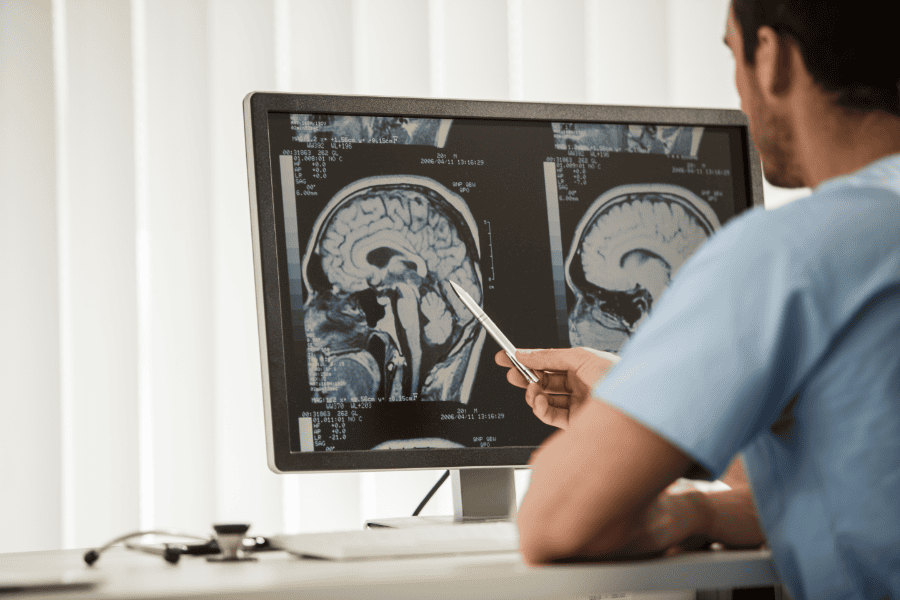
The Astrocytoma cancer diagnostics involve multiple steps confirming tumour presence, determining grade, and identifying molecular characteristics guiding treatment.
The treatment typically combines multiple approaches tailored to tumour grade, location, and patient factors.
Astrocytoma removal: Goals include obtaining tissue diagnosis, reducing tumour burden, and relieving cancer symptoms from mass effect.
Modern neurosurgical techniques include:
Complete removal improves survival significantly for low-grade tumours. For high-grade astrocytomas, even incomplete removal provides benefits when followed by radiation and chemotherapy.
Most astrocytomas (except some Grade 1) receive radiation after surgery. Radiation kills remaining cancer cells, delaying recurrence.
Temozolomide: The standard chemotherapy for astrocytomas, particularly high-grade types. Given orally, often concurrently with radiation then continued for 6-12 cycles.
Other agents: Bevacizumab treats recurrent astrocytomas by blocking blood vessel formation. Lomustine and other drugs may be used when standard treatments fail.
So, what is astrocytoma? It's a challenging diagnosis requiring expertise, comprehensive treatment, and tremendous courage from patients and families.
The journey ahead won't be easy but you deserve the right support. There might be side effects of cancer treatment, particularly for brain tumours. However, many patients achieve meaningful survival while maintaining good function.
Remember that survival statistics represent averages across diverse patient populations. Your individual prognosis depends on multiple factors oncology doctors can assess based on your specific situation.