
Heated chemotherapy, delivered where the cancer has spread.
When cancer has spread across the lining of the abdomen, HIPEC treats it in one planned operation. The surgeon first removes the visible tumour, then fills the abdomen with warmed chemotherapy to reach the microscopic disease that intravenous chemotherapy can miss.
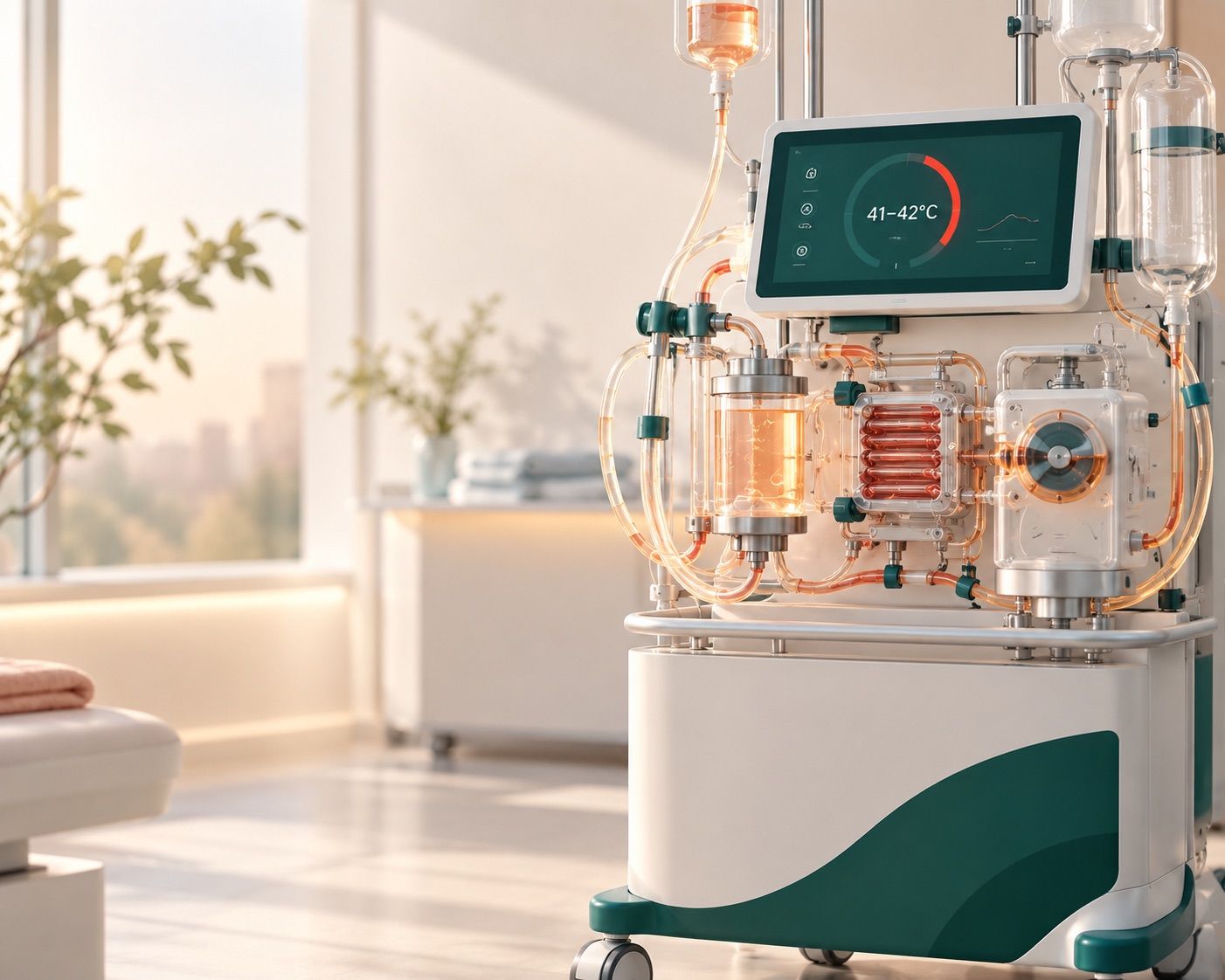
- 41–42 °C
- Chemotherapy warmed and circulated inside the abdomen
- 30–90 min
- Circulated once, during the operation
- CRS + HIPEC
- Tumour removal and heated chemo in one operation
One operation, two treatments.
HIPEC treats cancer that has spread across the lining of the abdomen, in a single planned operation rather than in separate rounds.
HIPEC stands for hyperthermic intraperitoneal chemotherapy. It is paired with cytoreductive surgery, or CRS. First the surgeon removes the tumour that can be seen in the abdominal cavity. Then, in the same operation, the cavity is filled with chemotherapy warmed to just above body temperature and circulated, so it reaches the surfaces that surgery alone cannot clear.
Inside a CRS + HIPEC procedure.
- 1. Cytoreductive surgery (CRS)
- The surgeon removes the visible tumour from the surfaces of the abdomen and, where it is needed, affected areas of nearby organs.
- 2. Heated chemotherapy (HIPEC)
- Chemotherapy warmed to 41 to 42 degrees Celsius is placed into the abdominal cavity and circulated for about 30 to 90 minutes, so it reaches the surfaces surgery alone cannot clear.
- 3. Closing up
- The chemotherapy is drained, the cavity is rinsed and the operation is completed, so both steps happen under one anaesthetic.
What the approach is built for.
Reaches what surgery leaves behind
Heated chemotherapy washes over the surfaces where microscopic disease can remain once the visible tumour has been removed.
Concentrated where it is needed
Delivering chemotherapy into the abdomen puts it in direct contact with the lining, with less spread through the rest of the body.
Heat that helps the medicine
Warming the chemotherapy is intended to improve how well it is taken up by the tissue it touches.
One planned operation
Removing the tumour and treating the cavity happen together, rather than as separate procedures on separate days.
Cancers HIPEC may be considered for.
Whether HIPEC suits you depends on the cancer, how far it has spread and your overall health. Your surgeon decides this with you, after reading your reports.
Ovarian cancer
Peritoneal surface cancers
Appendiceal cancer
Colorectal cancer with peritoneal spread
Peritoneal mesothelioma
Stomach cancer with peritoneal spread
HIPEC suits selected patients. Whether it is right for you is decided by your surgeon after reviewing your case. It is one option within a wider plan, not a standard step.
What recovery involves.
CRS and HIPEC is major surgery, so recovery is more involved than after keyhole procedures. Most people spend time in close monitoring straight after the operation, then a further stay on the ward before going home. Your surgeon gives you a timeline for your own case, including when you can eat normally, move about and return to daily life. Your care team stays your single point of contact through this period.
What happens when you get in touch.
HIPEC is never the starting point. Share your reports and our team reviews them, then points you to the peritoneal surgeon who should look at your case. Your first appointment is a consultation where the surgeon reads your imaging and pathology, examines you and talks through the whole picture, so you understand your options before anything is decided.