
Nutrition5 min read
Spirulina Biotic Powder: Benefits, Nutrition Facts and Its Role in Cancer Nutrition
Dr. Vrundali Kannoth
If you have been noticing tingling in your hands or feet, or struggling with memory during or after treatment, vitamin B1 thiamine can be one of the nutrients your body needs.
Thiamine is a water-soluble vitamin that helps convert food into energy, supports nerve signalling, and keeps your heart and brain working smoothly.
According to the NIH Office of Dietary Supplements, the recommended daily intake for adults is 1.2 mg for men and 1.1 mg for women.
The body only stores about 30 mg of thiamine at a time, and it has a short half-life of 9 to 18 days. So, intake needs to be steady, especially during illness, cancer treatment, or when appetite is low.
This article walks you through what vitamin B1 thiamine is, its benefits, its uses, its role in cancer recovery, dosage, and safety considerations.
Vitamin B1 thiamine are available at the Everhope store — reviewed for use during cancer care.
Vitamin B1 thiamine was the first B vitamin ever identified, and it belongs to the family of 8 water-soluble B vitamins that work together.

Vitamin B1 and thiamine are the same nutrient, with “thiamine” being the chemical name and “B1” the common designation. It sits within the broader vitamin B complex, each member of which supports a different aspect of energy metabolism.
Thiamine B1 is mostly available in the:
Since storage is limited, daily intake through food or supplements is required to keep levels steady. Every vitamin thiamine B1 contains thiamine pyrophosphate, which acts as a coenzyme in carbohydrate metabolism and nerve function.
When thiamine intake is inadequate, the coenzyme role suffers, and symptoms follow. This is why vitamin B1 thiamine is often described as a foundational nutrient instead of a specialised one.
The vitamin B1 thiamine benefits are foundational supports that keep several of your systems running well. Consistent intake of vitamin B1 thiamine is more critical than large doses, since your body cannot use more than it needs at any one time.
Thiamine acts as a coenzyme in converting carbohydrates and branched-chain amino acids into energy at the cellular level. Without it, glucose cannot be efficiently used, and fatigue sets in even when calorie intake is adequate.
The nervous system relies heavily on glucose for fuel, so thiamine deficiency shows up neurologically first.
Peripheral neuropathy is a classic early sign. Adequate thiamine also supports cognitive function, memory, and mood stability.
Thiamine helps maintain normal heart muscle function. The benefits include measurable improvement in heart function in people with congestive heart failure. It depends on deficiency rates between 21 and 98 percent based on the population studied.
Alongside a vitamin C supplement and other B vitamins, thiamine supports immune balance, healthy skin, and digestion. It works in the background, and the vitamin B1 thiamine function is most visible only when it is missing.
The main thiamine B1 uses fall into 2 groups:
Most healthy adults meet their needs through food alone. Supplements come in when diet, absorption, or metabolism cannot keep up. In these situations, vitamin B1 thiamine support is about restoring what the body cannot make or store on its own.
Prescription and over-the-counter thiamine is FDA-approved for treating beriberi and Wernicke encephalopathy, the two classical thiamine deficiency conditions.

Doses used clinically are much higher than the RDA, sometimes 50 to 100 mg daily or more, delivered by mouth or by injection.
People with alcohol use issues, chronic kidney or liver disease, HIV/AIDS, diabetes, or those on long-term diuretics are at higher risk of thiamine deficiency.
Vitamin B1 thiamine also supports pregnant and breastfeeding people, older adults, and those recovering from surgery or serious illness.
In each of these situations, food-first support is preferred, with supplementation used only when confirmed by blood tests or clinical judgement.
Thiamine works by activating thiamine pyrophosphate, the coenzyme form your body actually uses. This coenzyme helps 3 key enzyme systems:
Together, these enzymes drive glucose metabolism, energy production, and neurotransmitter synthesis.
When thiamine is low, all three slow down, which is why deficiency shows up as fatigue, nerve trouble, and cognitive changes at the same time.
The role of vitamin B1 thiamine for cancer recovery is one of the most under-recognised parts of clinical nutrition.
Deficiency is common in cancer patients, and correcting it can meaningfully improve symptoms. However, this is a targeted, evidence-based decision, and not a routine addition.
A study published in Psycho-Oncology found that 55.3 percent of inpatient cancer patients tested had measurable thiamine deficiency.

Risk was significantly higher in those receiving fluorouracil-based chemotherapy, in patients with meaningful weight loss, and in those undergoing active treatment. Yet, only 10.6 percent had thiamine tested before it became a clinical concern.
Cancer itself increases metabolic demand for thiamine. Chemotherapy drugs like 5-fluorouracil (5-FU) can worsen this.
A 5-FU catabolite inhibits an enzyme in the Krebs cycle, which raises thiamine consumption. Poor appetite, nausea, vomiting, and swallowing difficulties during treatment further reduce intake.
Vitamin B1 thiamine for cancer support can ease cancer fatigue, reduce chemotherapy-related neuropsychiatric symptoms, and prevent rare but serious complications.
Any decision to supplement belongs within a broader oncology nutrition plan and a balanced diet for cancer patients. Coordination with your oncologist matters, especially if you are also considering vitamin D and cancer support or a vitamin K2 (404) regimen.
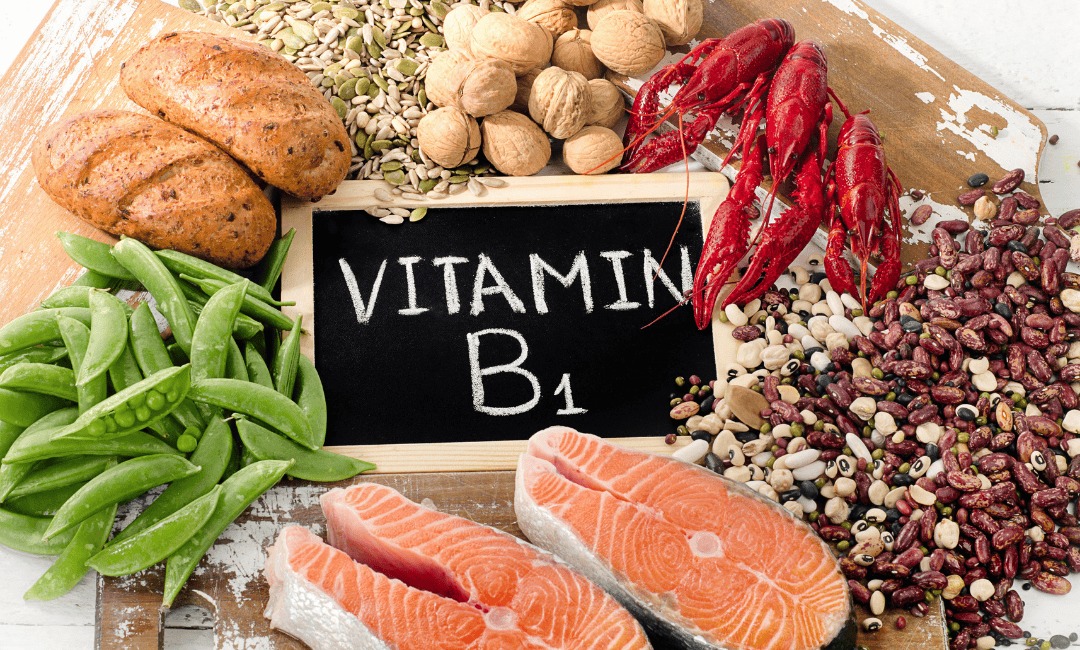
The best way to meet daily needs is through food. Vitamin B1 thiamine sources are widespread, so most people with a mixed diet get enough.
Thiamin B1 sources in food include:

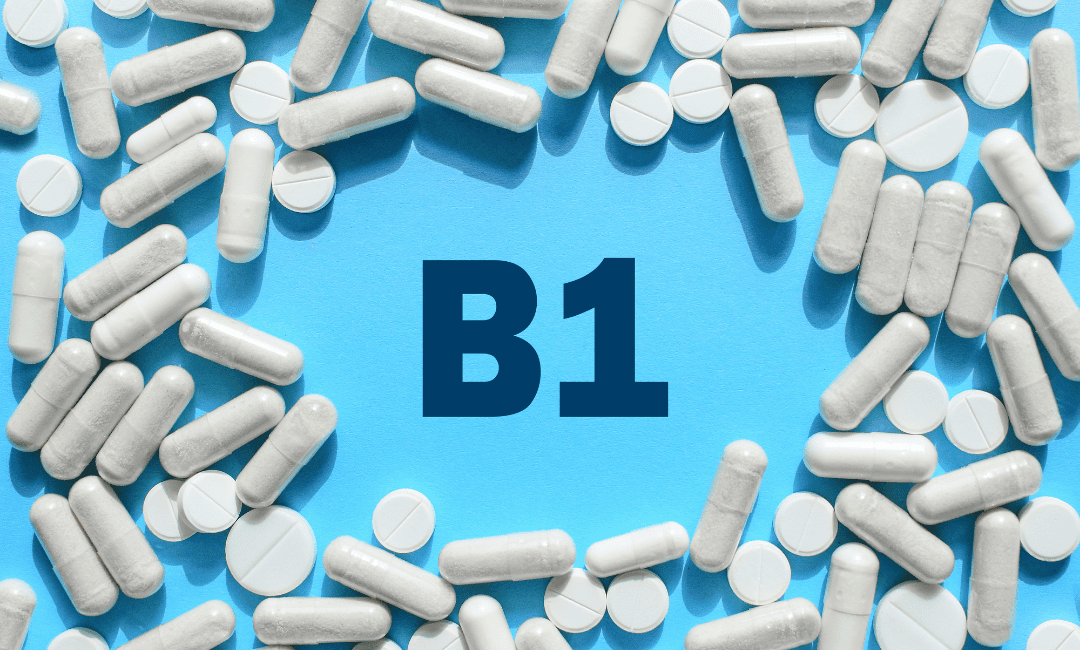
A thiamine B1 supplement is available as:
A thiamine B1 supplement may also come as part of a broader B-complex product.
For adults, the thiamine vitamin B1 dosage is 1.1 to 1.2 mg per day for maintenance. Therapeutic doses used for deficiency correction range from 25 mg to 300 mg daily under medical supervision.
There is no established tolerable upper intake level because the body excretes excess thiamine efficiently through urine.
Thiamine B1 deficiency is more common than most people realise, especially in older adults, cancer patients, and people with chronic illnesses or high alcohol intake.
Signs of low vitamin B1 thiamine can look similar to many other conditions, which is why a blood test is a useful next step.
| Category | Common causes | Typical symptoms | Advanced complications |
|---|---|---|---|
| Nutritional | Poor diet, restrictive diets, food insecurity | Fatigue, irritability, poor concentration | Beriberi (dry or wet) |
| Malabsorption | Coeliac disease, chronic diarrhoea, bariatric surgery | Weight loss, weakness, nausea | Cardiomyopathy |
| Alcohol-related | Long-term high alcohol intake | Cognitive changes, ataxia | Wernicke-Korsakoff syndrome |
| Cancer treatment | 5-FU chemotherapy, weight loss, active treatment | Neuropathy, confusion, memory issues | Wernicke's encephalopathy |
| Chronic illness | Diabetes, kidney disease, heart failure | Peripheral tingling, palpitations | Congestive heart failure |
| Medication-related | Long-term diuretics, some antibiotics | Muscle weakness, appetite loss | Neurological deficits |
Most vitamin B1 thiamine side effects are mild and rare, and no upper intake limit has been established. Awareness matters most for people receiving injectable thiamine or those with specific allergies:
| Concern | What it looks like | Who should be careful |
|---|---|---|
| Mild reactions | Nausea, stomach upset, sweating | Anyone starting high-dose supplements |
| Skin reactions | Itching, hives, rash | People with known B-vitamin sensitivities |
| Injection-site reactions | Warmth, tenderness, redness | Patients receiving IV or IM thiamine |
| Allergic reactions (rare) | Facial or throat swelling, difficulty breathing | Anyone with prior vitamin allergies |
| Drug interactions | Reduced effect of some chemotherapy drugs | Cancer patients in active treatment |
| Pregnancy and lactation | Safe at RDA levels; high doses not studied | Consult a clinician for a dose above 3 mg |
If you or someone you love is going through cancer treatment, thiamine adequacy is necessary and includes eating well, managing symptoms, and staying nourished during cancer care.
If deficiency is suspected because of fluorouracil-based chemotherapy, significant weight loss, or new neurological symptoms, a blood test is a simple next step.
Correcting deficiency can meaningfully improve fatigue, mood, and cognitive symptoms.
At Everhope, our oncologists work together to include nutrition in every treatment plan. This is so that supportive nutrients like vitamin B1 thiamine stay part of the conversation. The aim is fewer surprises, more clarity, and steadier recovery.
Yes. Thiamine is water-soluble and has no established upper limit. The body excretes excess in urine. At recommended daily amounts, it is safe for long-term use.
For deficiency correction, improvements in fatigue and neurological symptoms often begin within days to weeks. Full recovery from prolonged deficiency can take several months.
Untreated deficiency can progress to beriberi, Wernicke's encephalopathy, or Wernicke-Korsakoff syndrome, which are serious and potentially irreversible conditions. Early recognition through blood tests is important.