
What Is Acute Myeloid Leukemia (AML)?
On this page
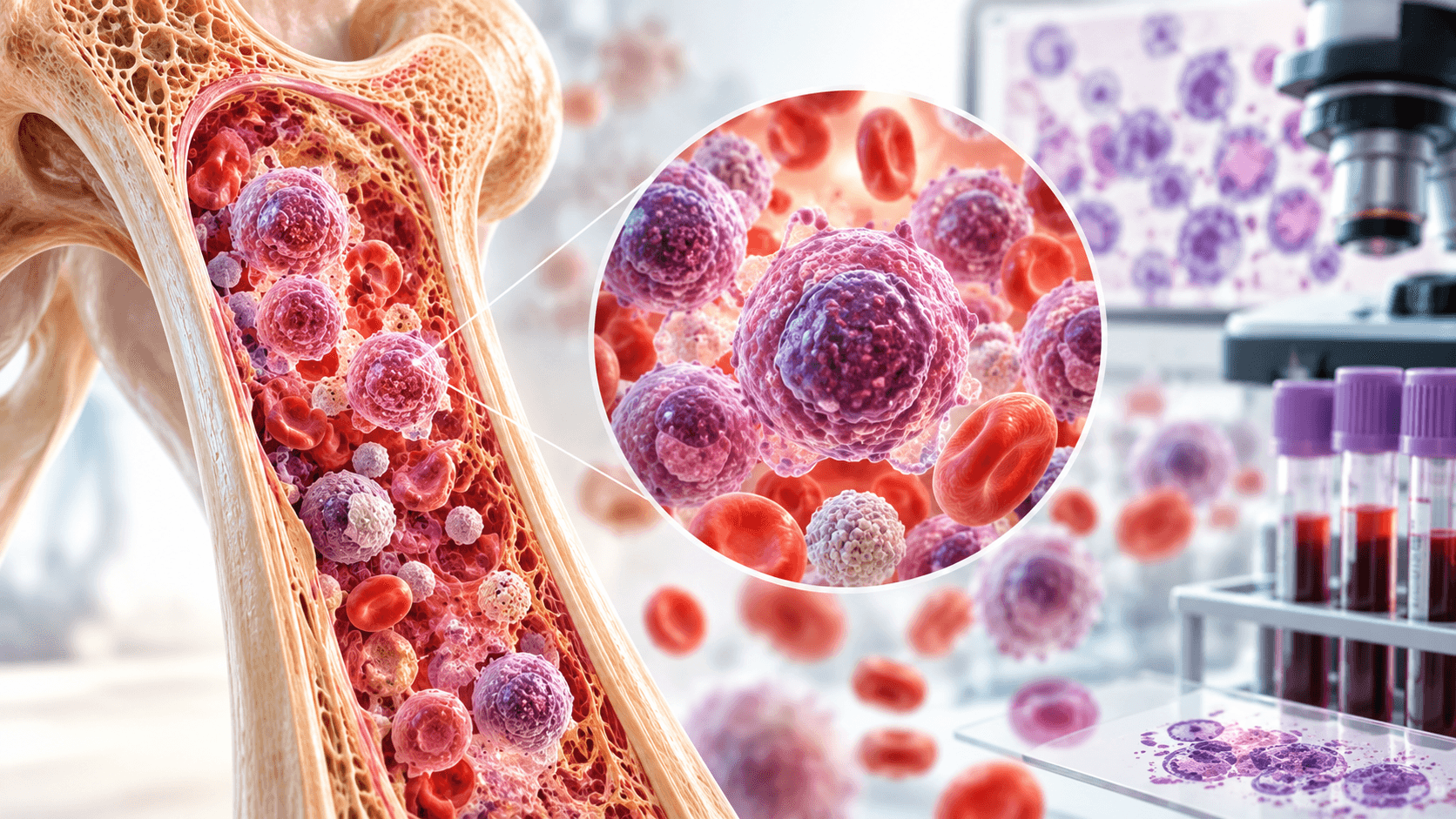
- AML is a fast-growing blood cancer that begins in the bone marrow, where new blood cells are made.
- In AML, immature myeloid cells (blasts) multiply uncontrollably, crowding out healthy blood cells and interfering with the production of red cells, white cells, and platelets.
- Because these abnormal cells grow quickly, AML can progress rapidly and needs prompt diagnosis and treatment.
What Causes AML?
- AML develops when blood-forming cells in the bone marrow gain genetic mutations that let them grow and survive abnormally.
- These mutations are usually acquired during life, not inherited.
- Risk factors include older age, previous chemotherapy or radiation, certain blood disorders, chemical exposures, and some inherited gene syndromes, but often there is no clear cause.
Common Symptoms of AML
- Symptoms result from the disruption of normal blood cell production, including:
- Fatigue and weakness (from low red blood cells/anemia)
- Frequent infections and fevers (from low/abnormal white blood cells)
- Easy bruising or bleeding, bleeding gums, or nosebleeds (from low platelets)
- Shortness of breath, dizziness, pale skin
- Other symptoms: bone pain, weight loss, swollen lymph nodes or spleen
- Persistent or unexplained symptoms—especially with abnormal blood counts—should prompt medical evaluation.
How Is AML Diagnosed?
- Blood tests:Complete blood count (CBC) and blood smear can reveal abnormal or low blood cell counts and presence of blasts.
- Bone marrow tests:Aspiration and biopsy confirm AML by checking for a high number of blasts (usually 20% or more).
- Cytogenetic and molecular testing:Chromosome analysis and molecular tests identify gene mutations and chromosomal changes that help classify AML and guide treatment.
Genetic and Molecular Testing in AML
- DNA and RNA analysis from leukemia cells can uncover mutations and gene fusions, helping define disease subtypes and identify options for targeted therapy.
- Testing may include mutation panels, fusion detection, and next-generation sequencing (NGS).
- These findings support precision medicine—customizing treatment to the patient’s unique genetic profile.
AML Subtypes and Genetic Changes
- AML is diverse, with various genetic abnormalities driving different subtypes.
- Some cases involve specific gene mutations (like FLT3, NPM1, IDH1/2), others involve chromosome changes or gene fusions (like RUNX1-RUNX1T1).
- This genetic diversity means patients can have very different disease courses and treatment plans.
How Is AML Treated?
- Chemotherapy:Mainstay treatment to kill leukemia cells and restore normal blood cell production; typically involves an initial phase (induction) followed by consolidation.
- Targeted Therapy:Used if specific mutations (FLT3, IDH1, IDH2) are present.
- Stem Cell Transplant:May be recommended for fit patients with higher-risk disease; carries risks but can improve long-term outcomes.
- Supportive Care:Includes antibiotics, antifungals, transfusions, growth factors, and monitoring to manage complications.
Planning Treatment in AML
- Treatment decisions are based on age, health, AML subtype, genetic results, prior treatments, and response to initial therapy.
- Molecular and cytogenetic findings are key to selecting the best approach and may point to clinical trial options.
Monitoring and Minimal Residual Disease (MRD)
- MRD refers to small numbers of leukemia cells that remain after treatment, which can be detected by sensitive tests (flow cytometry, PCR, NGS).
- MRD testing helps evaluate response and relapse risk.
AML Prognosis
- Outlook varies and depends on disease subtype, genetic features, age, health, and response to treatment.
- Younger, healthier patients with favorable genetic changes generally do better than older or frail patients with high-risk genetics.
- Survival rates and treatment success vary—prognosis should always be discussed with your care team.
Key Takeaways AML is a rapidly progressing blood cancer that disrupts normal blood cell production. Signs include fatigue, infection, fever, easy bruising/bleeding, and shortness of breath. Diagnosis is based on blood tests, bone marrow exams, and advanced genetic/molecular testing. Treatment options include chemotherapy, targeted therapy, stem cell transplant, and supportive care—tailored to the individual. MRD testing can track treatment response. Prognosis depends on many factors; always review your individual case with a specialist.
Common questions
Common symptoms:
Fatigue, infections, fever, easy bruising/bleeding, shortness of breath.
Diagnosis:
Blood tests, bone marrow biopsy, genetic/molecular testing.
Genetic tests used:
Cytogenetics, mutation/fusion testing, NGS panels.
Treatment options:
Chemotherapy, targeted therapy, stem cell transplant, supportive care.
Can AML be monitored with MRD testing?
Yes, using flow cytometry, PCR, or NGS to detect residual disease and relapse risk.